Best Outdoor Curtains for Privacy and Wind
A patio curtain needs to do two jobs at once: make the space feel private and behave predictably when the weather changes. The best outdoor curtains for wind are not simply the heaviest-looking panels. They are part of a planned setup that considers fabric coverage, mounting, clearance, and how the panels will be secured when the breeze picks up.

Start with the opening you want to cover, then work outward to the rod, track, anchors, and nearby walls. This approach helps you choose curtains that add usable privacy without asking fabric or hardware to handle conditions they were never designed for.
What makes outdoor curtains more private?
Privacy comes from coverage, not from a single fabric label. A panel that is too narrow, too light in color for its background, or hung with gaps at the edges will leave clear sightlines even if the fabric itself is opaque.
- Fabric opacity: Choose a fabric and color that visibly interrupts the view through the opening. Test a sample against daylight rather than judging it only indoors.
- Fullness: For a gathered look and better privacy, plan roughly 1.5 to 2 times the opening width in total panel width. Less fullness can work for a flat, track-mounted look, but it leaves less overlap for privacy.
- Overlap: Let center-closing panels overlap slightly, and extend the rod or track beyond the opening when possible. That reduces side gaps when someone is seated at an angle.
- Color and placement: Darker panels often read as more visually solid in bright light. Position curtains where they block the actual sightline—from a neighboring deck, path, or street—not just where they look balanced from inside.
Browse the Snowcity Outdoor Curtains collection with the finished width of each opening in hand. The right amount of fabric makes a greater difference to privacy than adding decorative layers later.
How to reduce curtain movement in wind
No loose curtain is windproof. The practical goal is to limit flapping during ordinary breezes and to give the panels a safe, simple position for gusty weather. Begin with rigid, properly mounted hardware that suits the mounting surface. A rod that flexes, loose brackets, or a track with inadequate end stops can make a manageable curtain setup feel unstable.
For the panels themselves, these measures are useful:
- Use tiebacks for open periods. Tie panels to pergola posts or dedicated holdbacks so they cannot sweep across a dining area or catch on furniture.
- Add bottom restraint where appropriate. Bottom weights, clips, or anchors can reduce lift and side-to-side movement. Use hardware that releases easily rather than creating a rigid connection that may strain the fabric or frame.
- Keep the hem clear. A hem that drags on decking collects water and dirt, while a panel hung too high can catch more air. Leave a small practical clearance above the surface.
- Close in sections. If a wide opening needs coverage, two or more panels can be easier to secure than one very broad sheet of fabric.
Weights and anchors are helpful for routine movement, but they are not a substitute for weather judgment. Tie curtains back or remove them before strong winds, storms, or any condition that could pull on the hardware. This is especially important on exposed decks, upper-floor balconies, and open-sided pergolas.
Wind-friendly layouts for patios, porches, and pergolas
Patio with one exposed side
Use a pair of overlapping panels on the side facing a neighbor or prevailing breeze. When privacy is needed, close the panels across the opening; when the patio is in use, tie each one to an outer post or wall-mounted holdback. This preserves the view from the other sides and keeps the fabric out of walkways.
Covered porch
A porch roof offers a useful mounting line, but side winds can still move fabric significantly. Install sturdy brackets into suitable structural material, use end stops, and keep panels divided by bay. For a detailed starting point on choosing coverage and placement, see our patio curtain guide.
Pergola
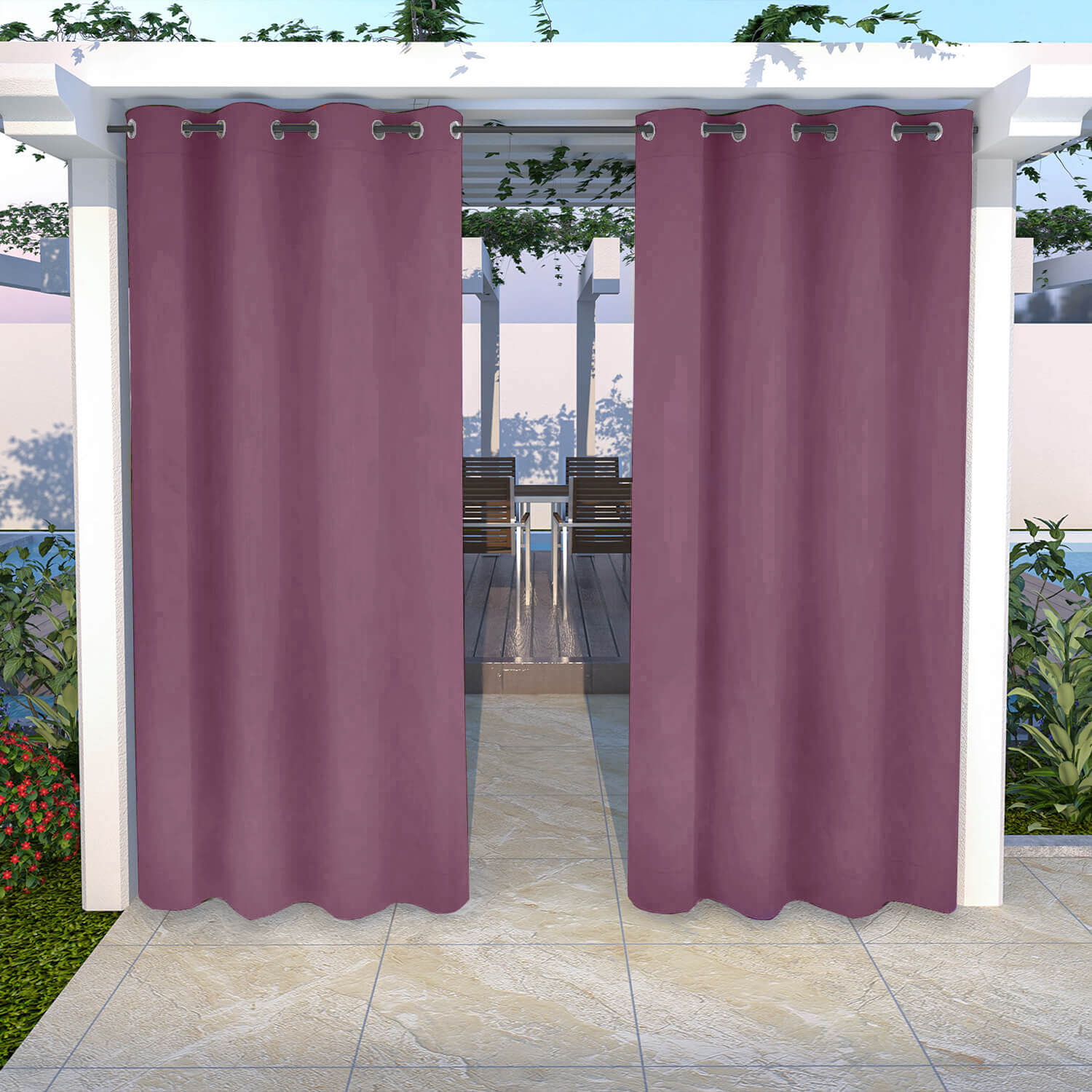
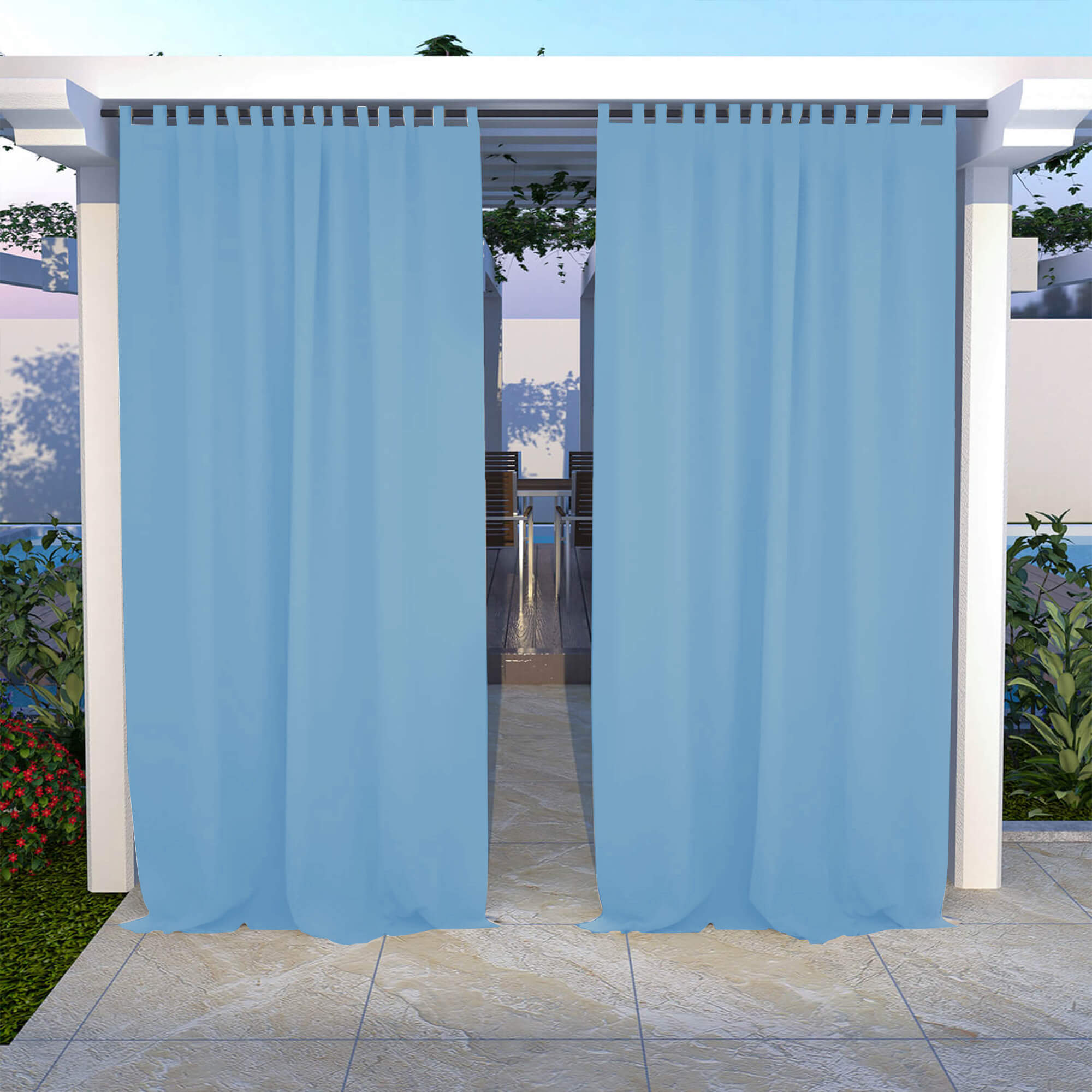
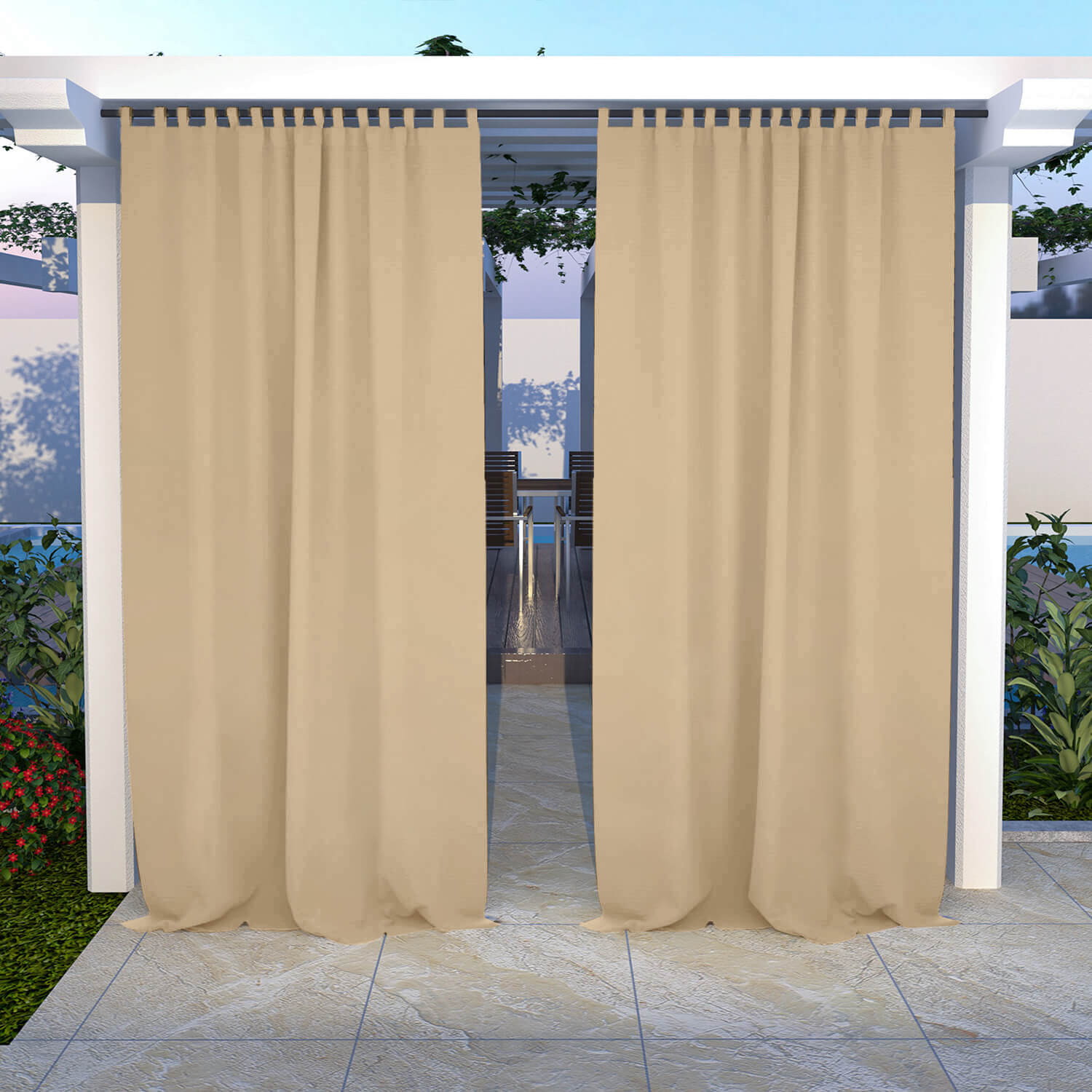
For a pergola, mount curtains at the outer beam line so they can close the side that needs privacy. Use post tiebacks and consider bottom restraint only where it will not create a trip hazard. The photo above shows a simple pergola arrangement: panels are tied to the posts when the dining space is open, rather than left to move freely.
Choosing a practical Outdoor Curtains setup
Snowcity approaches Outdoor Curtains as an installation decision as well as a style decision. Measure the finished span, choose enough width for useful overlap, and decide where panels will rest when tied back before ordering. Then match the rod, track, or hooks to the weight of the panels and the structure that will support them.
If your space is exposed, keep the setup simple: fewer long, loose edges; accessible tiebacks; and a clear plan for high-wind days. Our upcoming installation guidance will cover more mounting details; meanwhile, the Outdoor Curtains collection is the best place to compare options for your patio, porch, or pergola.
FAQ: Outdoor curtains for wind and privacy
How much fullness do outdoor curtains need for privacy?
For most rod-mounted setups, aim for total panel width of about 1.5 to 2 times the opening width. The exact amount depends on the fabric, desired look, and whether panels need to overlap at the center and sides.
Do curtain weights work outdoors?
They can reduce routine movement, particularly along the hem, but they do not make curtains safe to leave deployed in high winds. Use them with stable hardware and tie curtains back before severe weather.
Are tiebacks better than anchors?
They solve different problems. Tiebacks secure open panels to a post or wall; anchors or clips can help hold closed panels in position. Many exposed spaces benefit from both, provided the setup can be released quickly.
Should I remove outdoor curtains for winter or storms?
Consider removing or storing panels during prolonged severe weather, strong seasonal winds, or when the outdoor area will not be used. Follow the product care guidance and inspect hardware before rehanging.
Ready to plan a more private, wind-friendly outdoor space? Shop Snowcity Outdoor Curtains and choose a setup that fits your opening, hardware, and everyday weather conditions.