Outdoor Curtains for Wind: Setup Tips That Actually Help
Aug 04,2026 | Snowcity
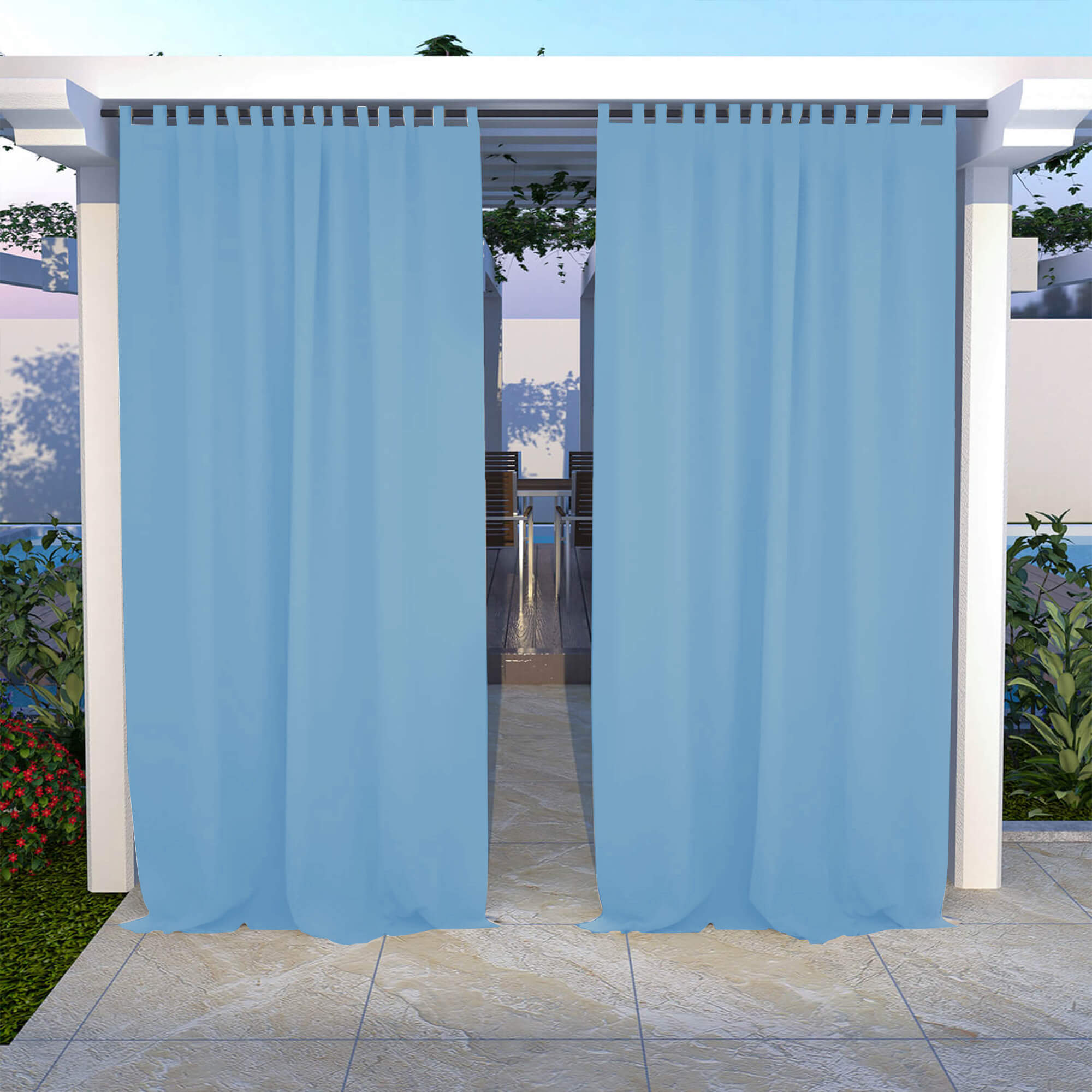
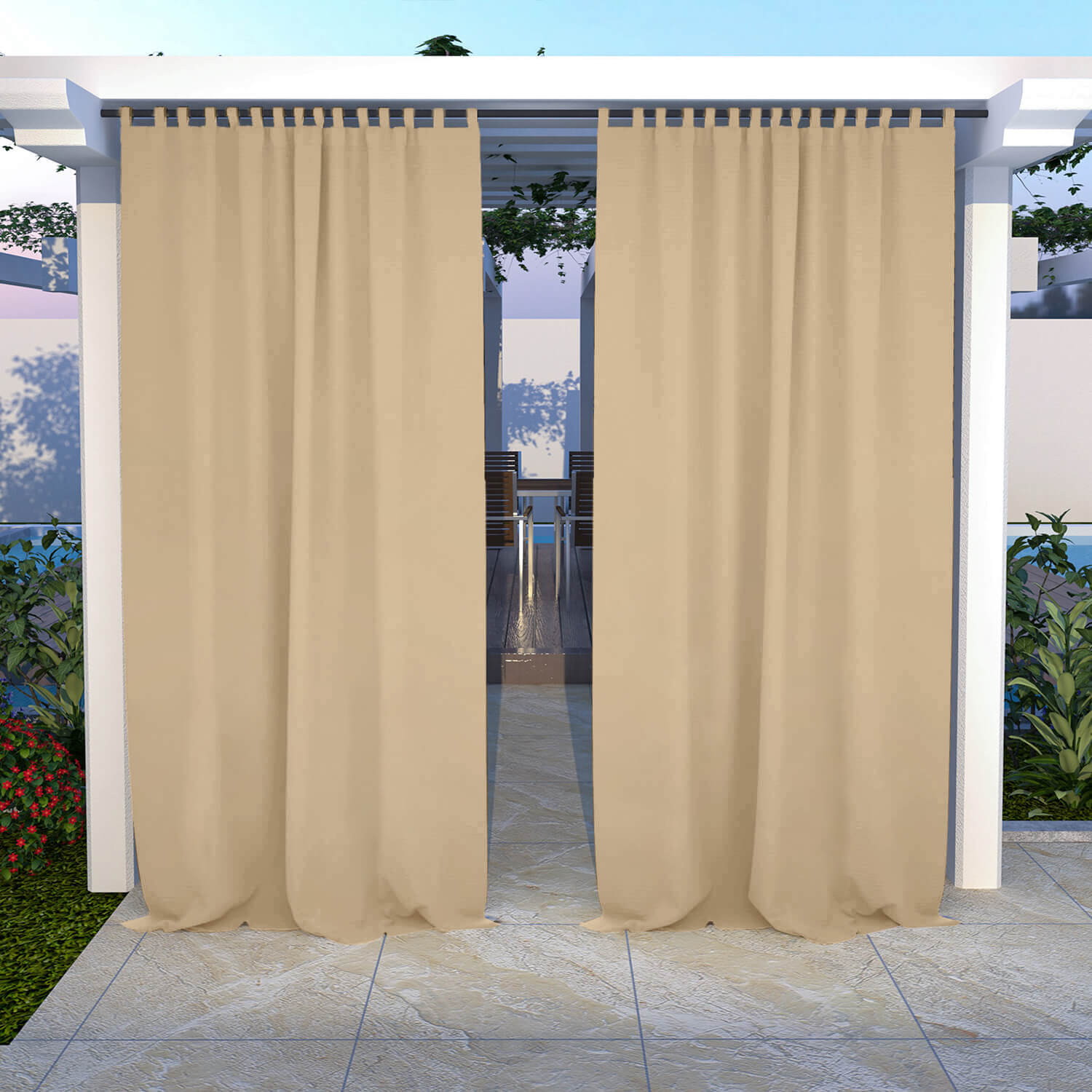
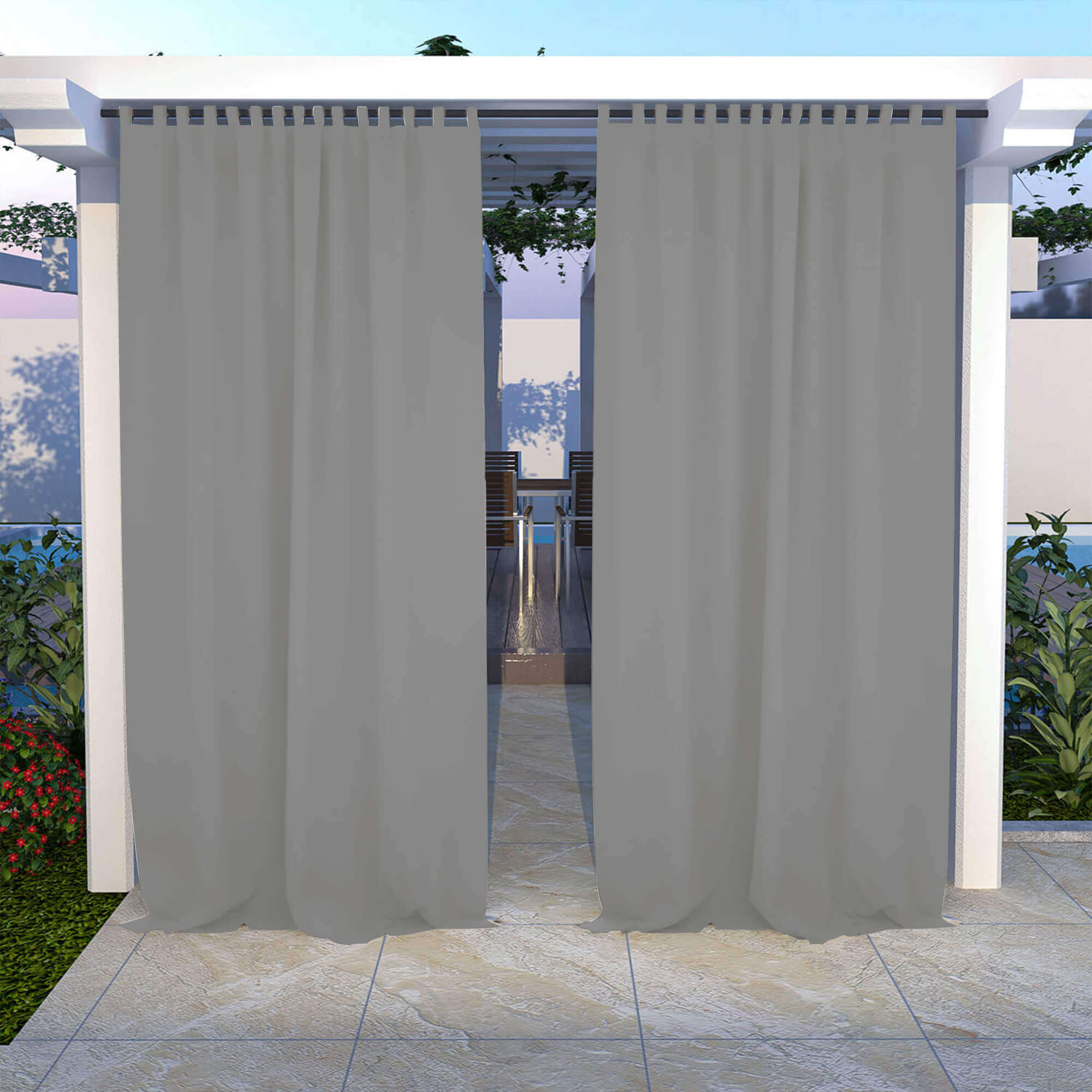
Outdoor curtains for wind can make a patio or porch more comfortable, but no ordinary curtain is wind-proof. The useful question is not whether a panel will stay perfectly still in every breeze; it is whether the hardware, panel layout, and daily routine give it sensible support in the conditions your space normally sees.
A wind-aware setup can reduce flapping, twisting, and loose panels. It cannot turn fabric curtains into a storm barrier. Start with secure mounting, plan how the lower edge will be controlled, and be ready to tie back, secure, or remove panels when the forecast changes.
Can outdoor curtains handle wind?
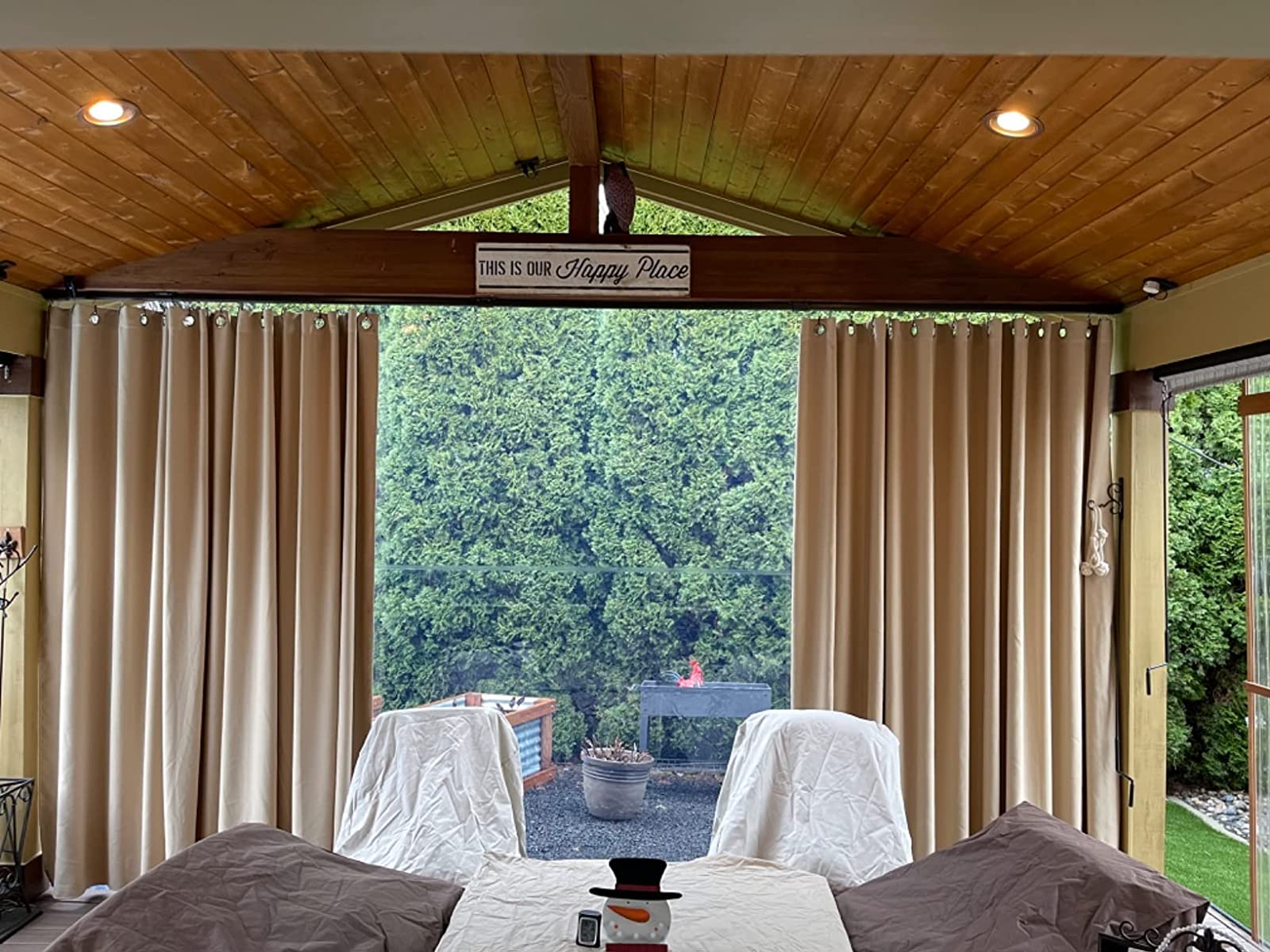
They can be used in light, routine breezes when they are installed thoughtfully, but exposure varies dramatically by location. A protected porch behaves differently from an open deck, a high balcony, or a pergola facing a prevailing wind. The structure, hardware, panel size, and how often the area is exposed all matter.
Use product information and care guidance as your baseline, then judge your own site honestly. If furniture moves, doors slam, or loose items regularly blow around, curtains may need to be tied back or taken down more often. For a broader comparison of privacy and wind planning, read our outdoor curtain privacy and wind guide.
Start with a secure top installation
The top support is the foundation of the setup. Mount a rod, track, or other hardware to a suitable structural surface, using hardware designed for the load and outdoor setting. A long span, heavy panels, or frequent wind exposure may call for more support points than a short, sheltered opening. Follow the instructions for both the curtain and mounting hardware.
Check that the rod or track is level, brackets are secure, and end stops prevent panels from sliding off. Keep the path clear of doors, lights, fans, and walking areas. An installation that starts secure is easier to inspect and maintain over time.
Control the lower edge with practical anchors
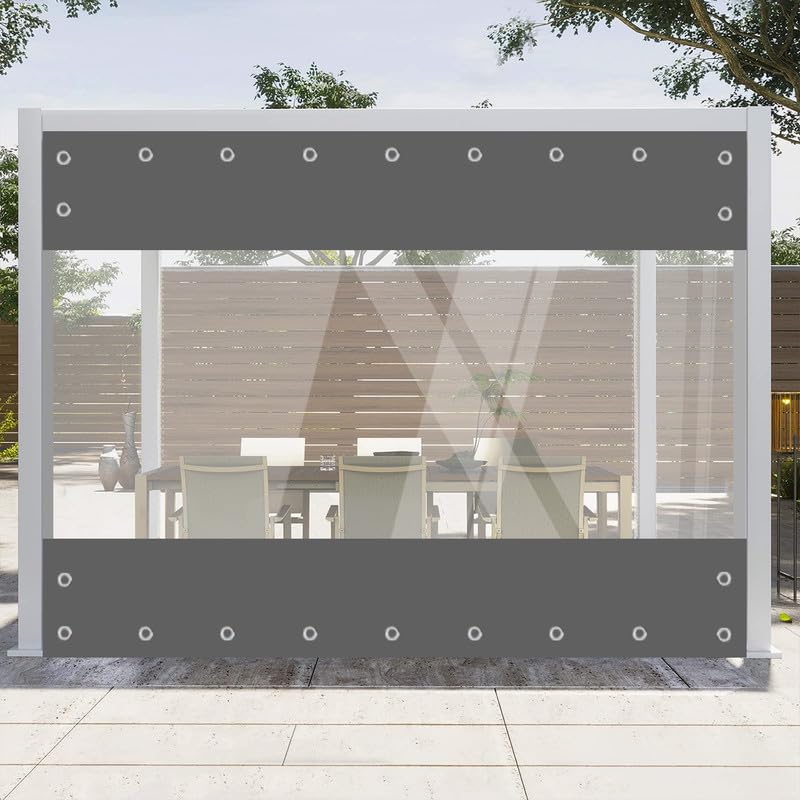
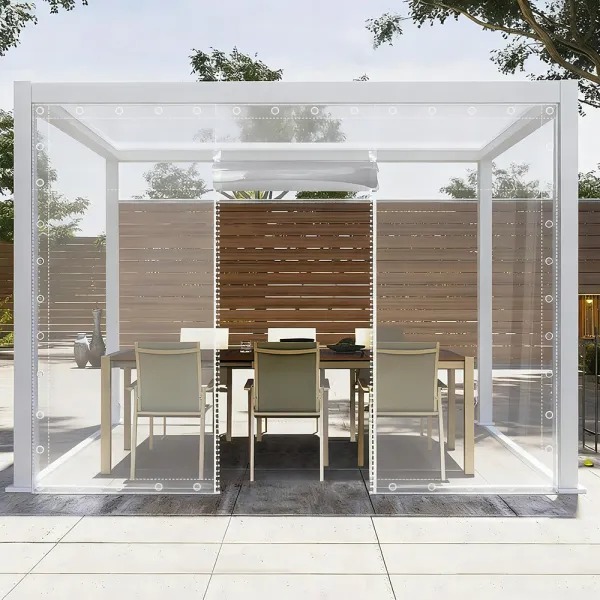
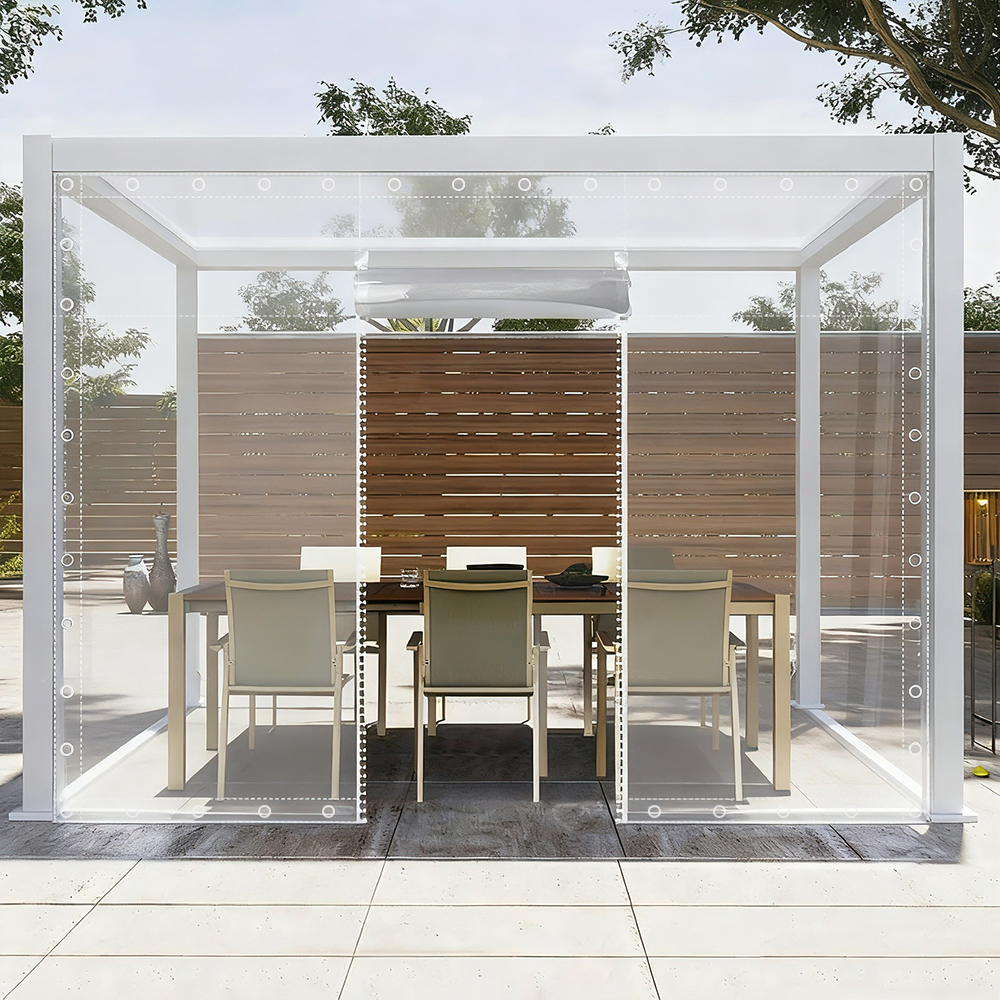
The bottom of a curtain is where wind usually creates the most motion. Bottom grommets can be useful because they provide a reinforced point for a lower rod, a cord, a clip, or another compatible anchor. They are not a guarantee against gusts, but they can help keep the lower edge closer to the opening instead of letting it lift and twist freely.
Depending on the structure, a lower rod or tensioned line may be a better choice than loose weights. If you use weights, make sure they are designed for the task, cannot become a tripping hazard, and do not stress the fabric or grommets. Avoid improvised heavy objects that can damage the deck, the panel, or someone nearby if the curtain shifts.
Use tiebacks and holdbacks for open panels
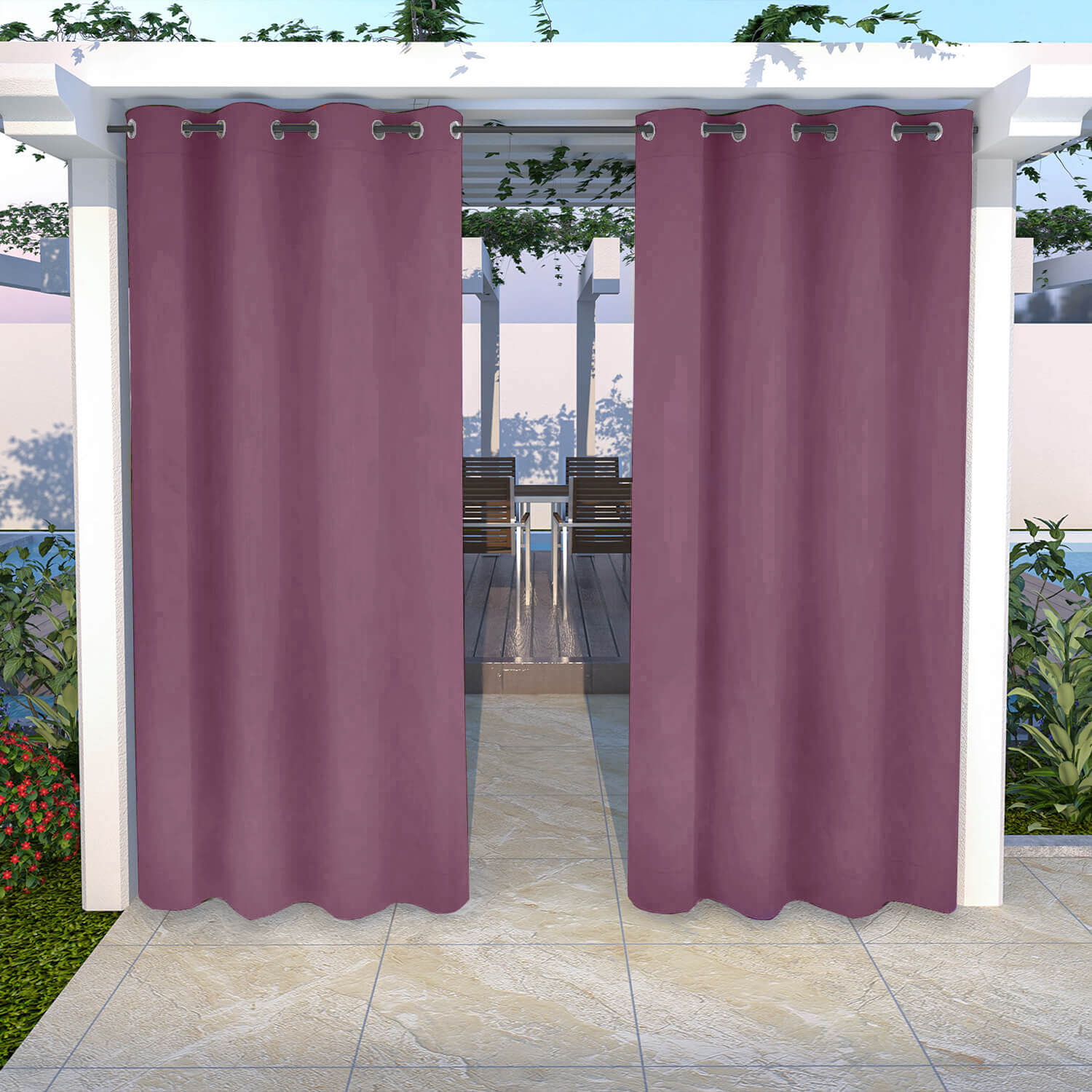
Tiebacks are helpful when you want the space open. They gather panels close to a post or wall so that the fabric is less likely to whip across the opening. Use a secure tieback point and keep the bundled fabric away from heat sources, doors, and routes where people walk.
When the panels are closed, tiebacks are usually not the answer. A closed curtain may need lower-edge control and enough overlap instead. Think of tiebacks as an everyday open-position tool, not as a substitute for storm preparation.
Choose panel count and fullness with wind in mind
More fabric creates a fuller look and can improve overlap, but it also gives wind more material to move. For many openings, two panels that meet in the middle provide flexible access and let you secure each side separately. Measure from the installed rod or track position, and choose widths that allow useful coverage without leaving excessive loose fabric.
As a general starting point, a combined panel width of about 1.5 to 2 times the span gives fullness for an everyday curtain setup. In an exposed location, it is worth considering how that extra material will be controlled before selecting the fullest look. Our outdoor curtain installation guide walks through measuring and mounting details.
Know the wind limits of your space
Wind is not only about speed. Direction, sudden gusts, rain, surrounding buildings, and the height of the installation change the forces on a panel. An open side of a pergola can funnel air; a balcony can receive stronger gusts than a ground-level patio; wet fabric can also be heavier and slower to dry.
Build a simple routine: check panels and hardware after breezy days, keep tiebacks accessible, and avoid leaving curtains unattended when conditions are expected to become rough. If wind picks up beyond what your setup can comfortably manage, secure the panels or remove them according to the product guidance.
Storm safety comes before convenience
Outdoor curtains are not designed to protect a structure during a storm. Before strong winds, thunderstorms, or severe weather, close and secure the space only if that is safe and consistent with the product instructions; otherwise tie back or remove the panels before the weather arrives. Do not go outside to adjust curtains once hazardous conditions have begun.
Afterward, inspect the rod or track, brackets, grommets, hems, and any lower anchors for wear. Replacing a worn part early is safer than relying on a setup that has already loosened.
Plan a wind-aware Snowcity outdoor curtain setup
Browse the Snowcity Outdoor Curtains collection with your opening size, mounting points, and local exposure in mind. Review each product’s dimensions, fabric details, installation needs, and care guidance before ordering.
Shop Snowcity Outdoor Curtains and plan the anchors, tiebacks, and weather routine that make the most sense for your patio, porch, pergola, or balcony.
Frequently asked questions
Are bottom grommets useful for outdoor curtains in wind?
They can provide a reinforced point for compatible lower rods, cords, or anchors, helping control lower-edge movement. They do not make a curtain wind-proof, so use them alongside secure top hardware and sensible weather practices.
Do weights work on outdoor curtains?
Purpose-made weights may help in a suitable setup, but they must be secure and should not create a tripping hazard or strain the fabric. A lower rod or compatible anchor can be a more controlled option where the structure allows it.
Should I remove outdoor curtains in high wind?
Follow the product’s care guidance and use your local conditions as the deciding factor. Secure or remove panels before strong wind or storms rather than treating them as a protective barrier.
How can I stop outdoor curtains from blowing around?
Use secure mounting hardware, enough support brackets, tiebacks for open panels, and lower-edge control such as compatible grommets and anchors. Check the setup regularly and reduce exposure when the weather worsens.
Comment