Outdoor Privacy Curtains: How to Choose the Right Coverage
Aug 02,2026 | Snowcity
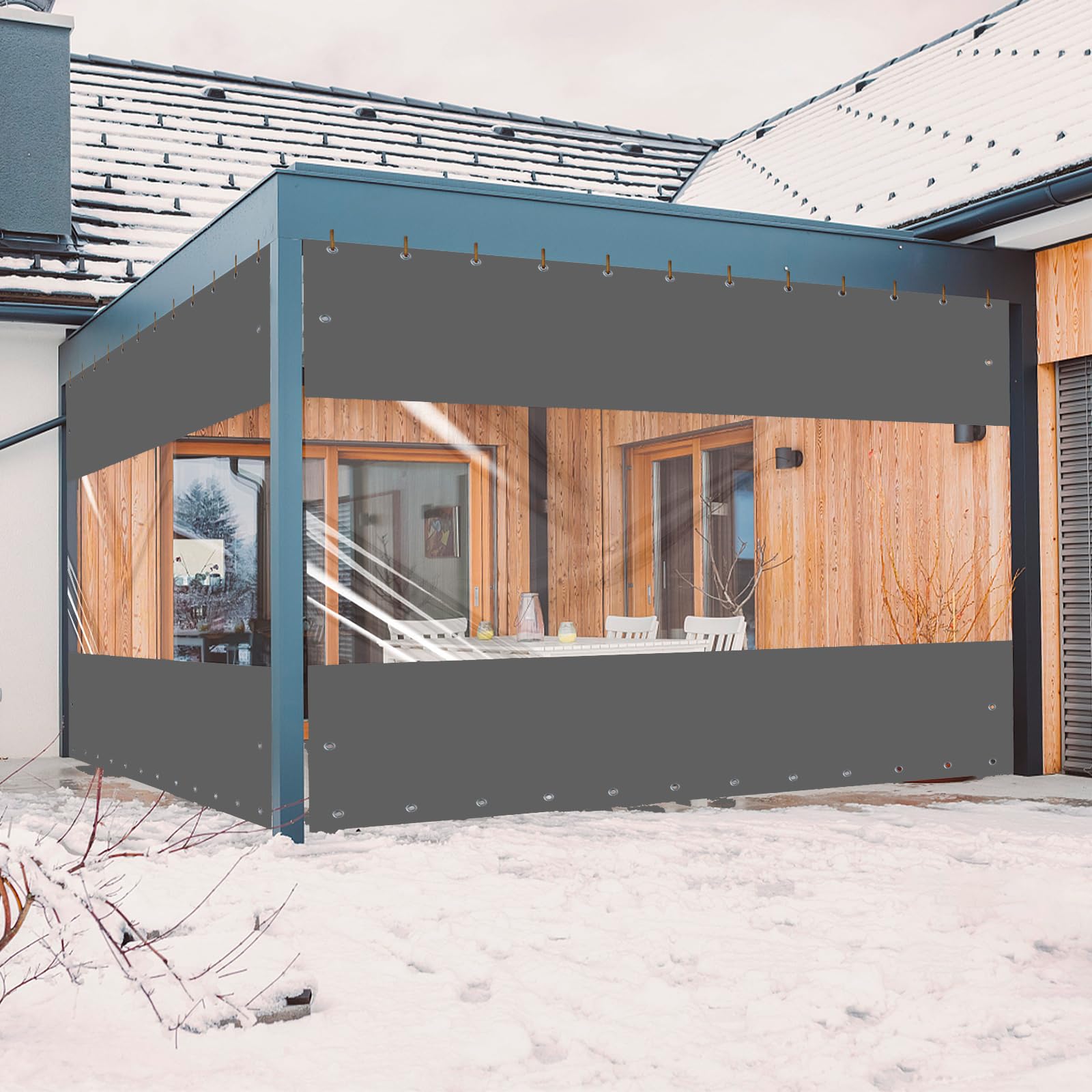
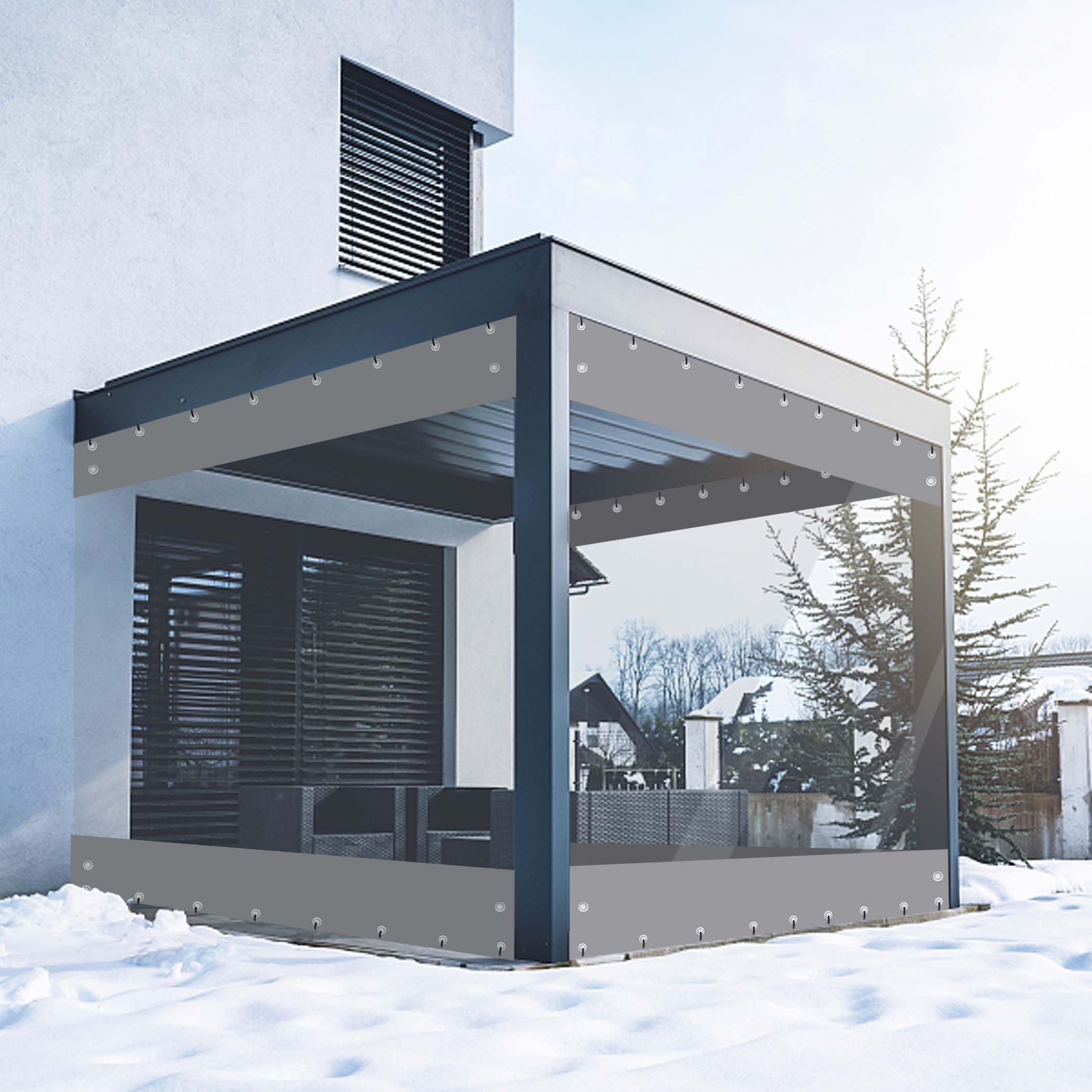
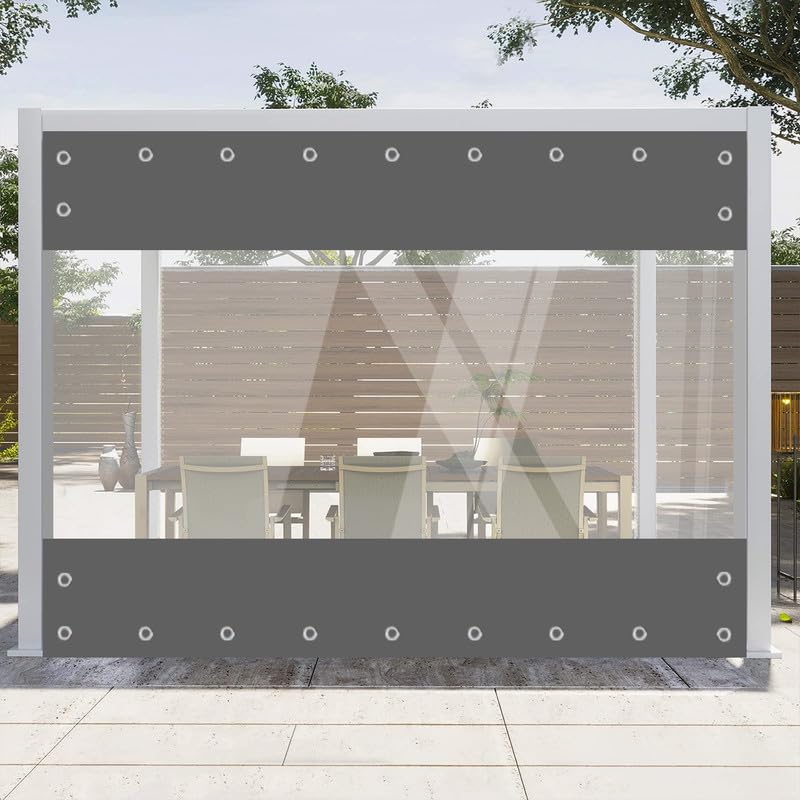
Outdoor privacy curtains are a practical way to make an open patio, porch, or balcony feel less exposed. They create flexible visual coverage when you close them, while still allowing you to open the space for a view, a breeze, or access.
The best result comes from planning coverage instead of expecting a curtain to act like a permanent wall. Fabric density, color, panel width, overlap, lighting, and the way the panels are mounted all affect how private the space feels.
Do outdoor curtains really add privacy?
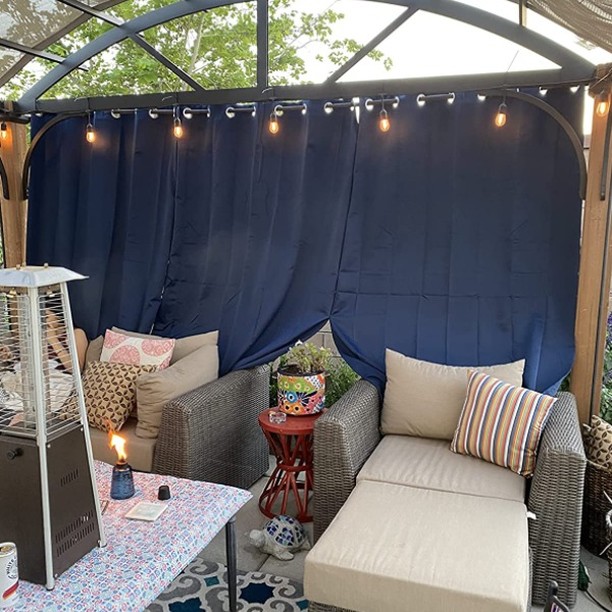
Yes. When panels cover the opening and meet with enough overlap, they can interrupt direct sightlines from a neighboring yard, a sidewalk, or a shared outdoor area. They are especially useful when privacy is only needed at certain times of day: close the panels for dinner or quiet time, then tie them back when the space is open.
Privacy is not all-or-nothing. A curtain may soften a view from an angle without fully blocking it from every position. At night, light from inside or from a porch fixture can make the fabric appear more transparent from outdoors. Before committing to a layout, consider where people will be looking from and test your intended lighting if possible.
For privacy paired with realistic wind planning, see our outdoor curtain privacy and wind guide.
Where outdoor privacy curtains work best
Patios with a pergola, covered porches with posts, gazebos, and many balconies can all benefit from a curtain setup, provided there is a sound structure for the rod, track, or other hardware. Start with the side that faces the closest neighbor, a busy path, or the street rather than automatically covering every edge.
On a patio, curtains can define a seating or dining zone without enclosing it completely. On a porch, they can screen a side opening while keeping doorways and the front view clear. On a balcony, measure carefully and check building rules before attaching anything; railings, sprinklers, shared walls, and wind exposure may limit the best approach.
Choose color, fabric, and opacity for the view you want
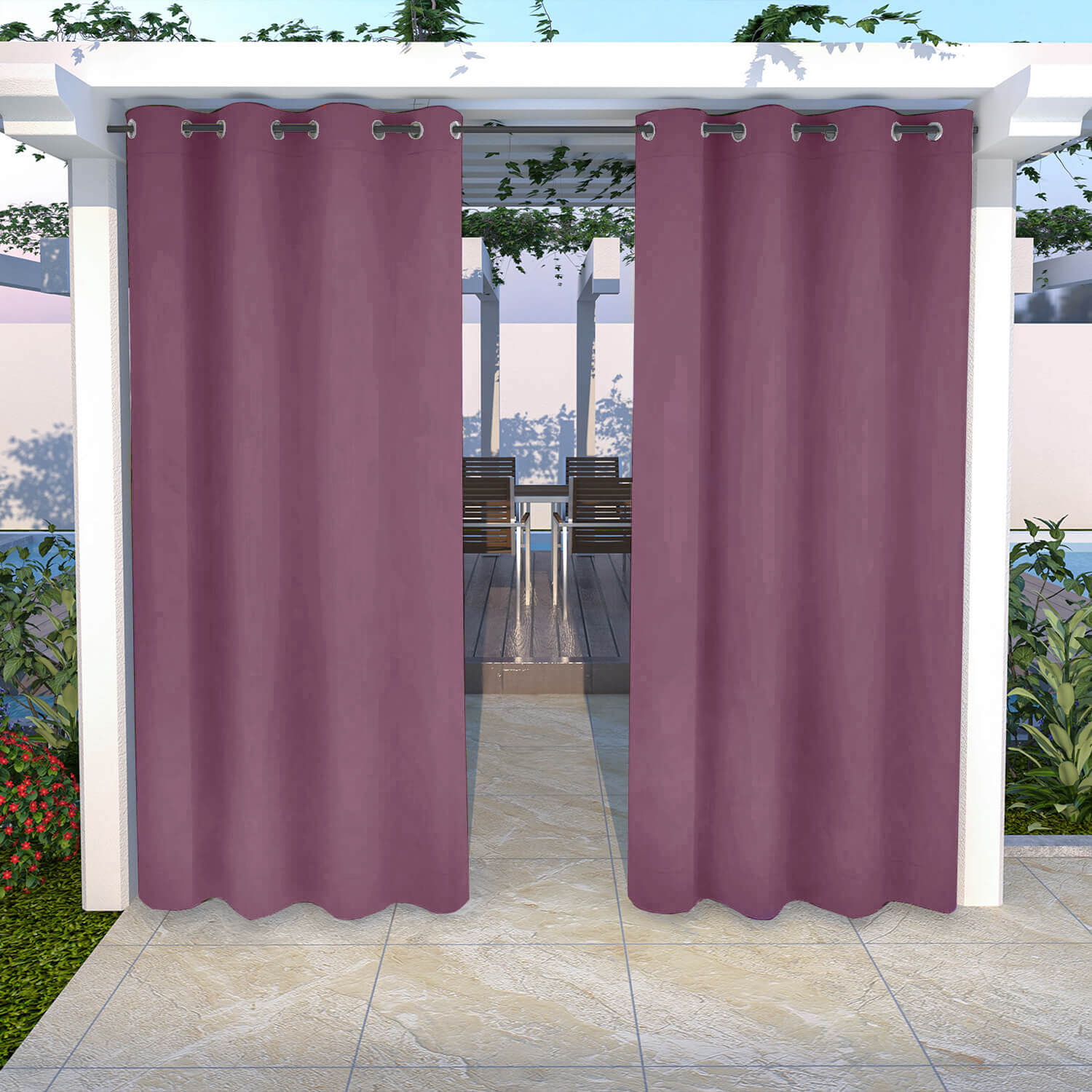
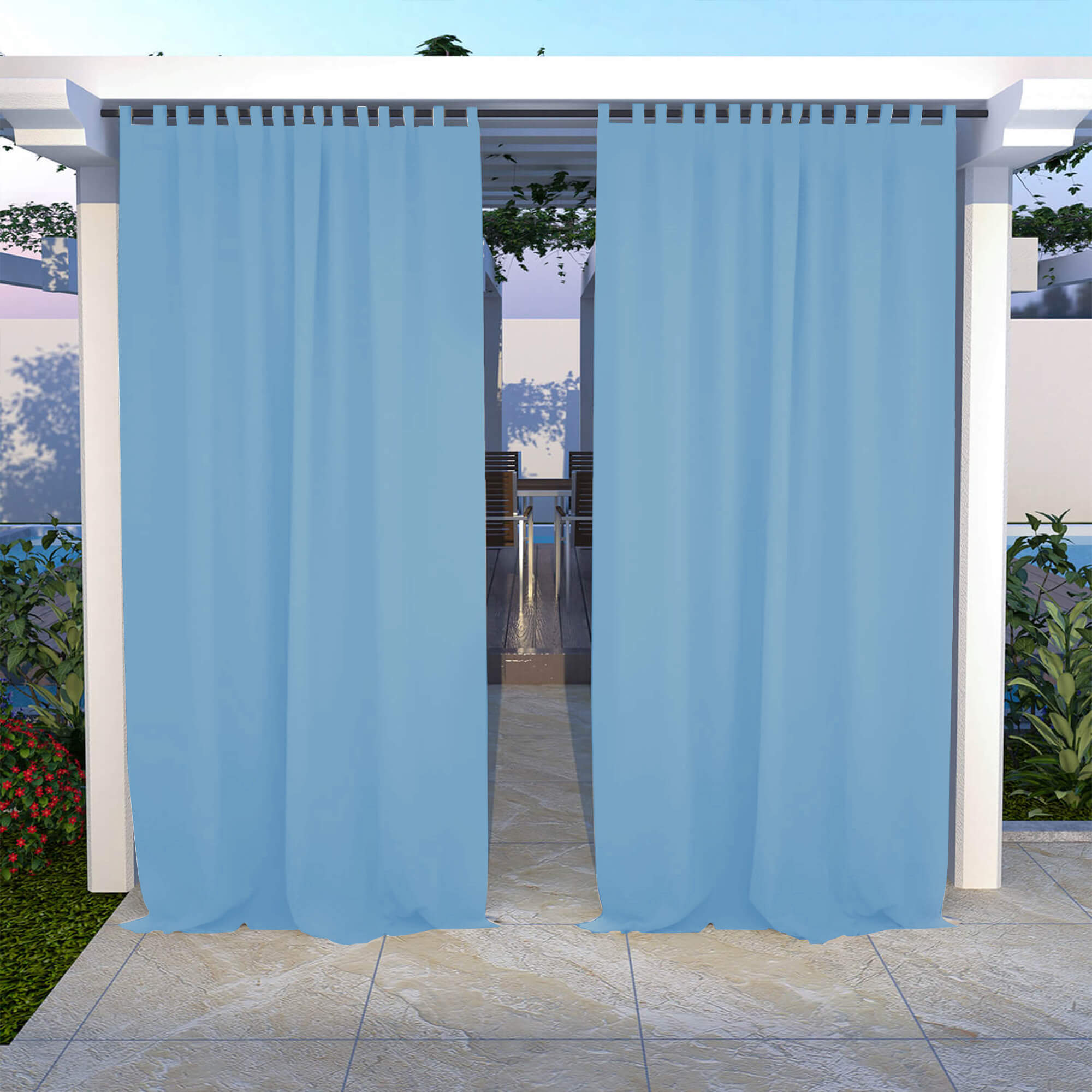
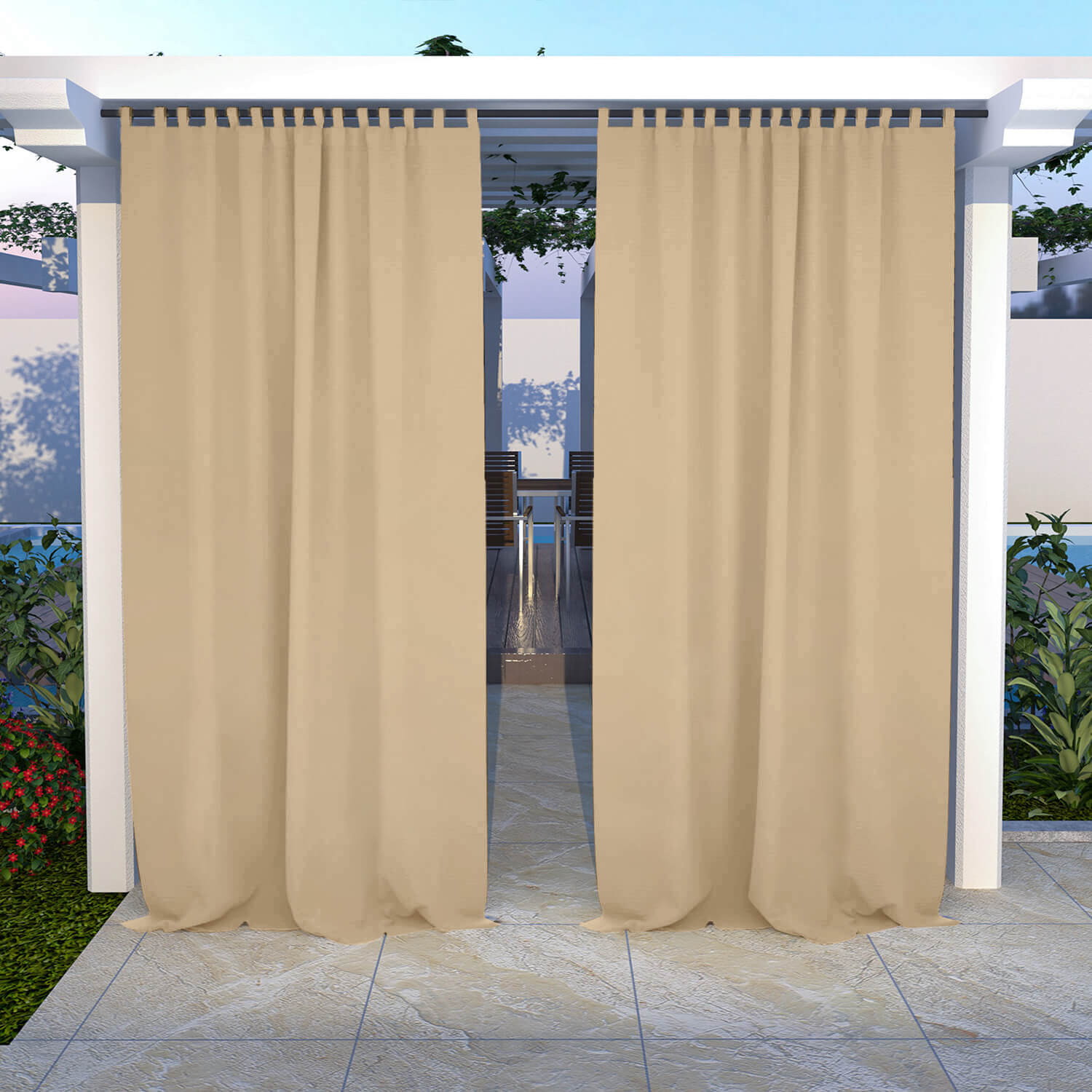
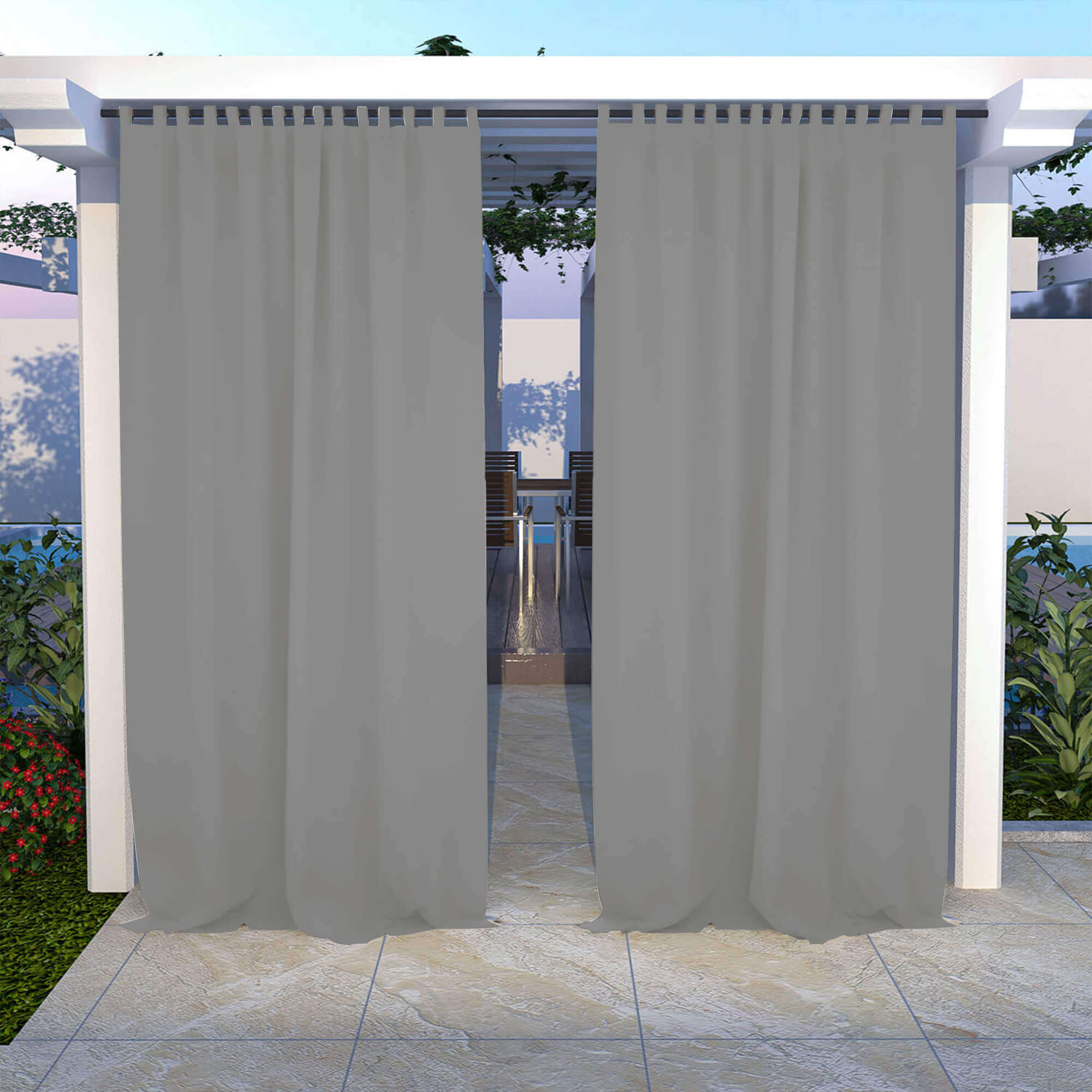
Color affects the visual boundary as much as the decor. Light neutrals can keep an outdoor area bright and airy, but they may offer a softer screen. Medium and darker colors often create a stronger sense of separation, though they can make a compact space feel more enclosed.
Look beyond broad claims such as “privacy” or “blackout.” Product photos, fabric details, and stated dimensions give a more useful comparison. A denser-looking fabric can reduce direct views in daylight, but no ordinary outdoor curtain should be expected to block all silhouettes, light, rain, or wind. Choose the coverage level that fits your space and use it with the product’s care instructions.
Plan enough width for fullness and overlap
A panel that is exactly as wide as its opening tends to pull flat and leaves gaps whenever it moves. For a more useful privacy setup, begin with a combined panel width of about 1.5 to 2 times the installed rod or track span. The lower end produces a neater, flatter appearance; the higher end gives fuller folds and more material to overlap.
Two panels meeting in the middle are often the easiest arrangement for a patio or porch bay. Allow extra width so the panels overlap at the center when closed, and let them extend slightly beyond the posts or edges where practical. Those small details help limit straight-through views at the places gaps are most noticeable.
Need help taking the numbers? Follow our custom outdoor curtain measuring guide before selecting a size.
Mounting details that help reduce gaps
Measure from the finished hardware position, not from the outer roof edge. Mounting a rod or track close to the beam or ceiling can reduce the gap above the panel. A curtain that extends close to the floor or deck usually gives better visual coverage, although leaving a small clearance helps it move freely and avoids collecting dirt or moisture.
Secure hardware to an appropriate structural surface and keep it clear of doors, lights, fans, and walking paths. Tiebacks, holdbacks, or clips help hold panels open when you want airflow. In wind, both open and closed curtains can move. Follow the product and hardware guidance, and secure, remove, or bring panels in when conditions call for it rather than treating them as a storm barrier.
Build flexible coverage around daily use
The most successful outdoor privacy curtain setup is easy to close, easy to open, and sized for the side you actually want to screen. A thoughtful layout gives you control over visibility without turning the whole patio into a fixed enclosure.
Explore the Snowcity Outdoor Curtains collection to compare options for flexible privacy, shade, and everyday patio use. Review each product’s dimensions, fabric details, mounting needs, and care guidance before ordering.
Shop Snowcity Outdoor Curtains for flexible coverage, then choose panel widths and installation details that suit your outdoor space.
Frequently asked questions
Are outdoor privacy curtains good for patios, porches, and balconies?
They can be, as long as the space has suitable mounting points and the layout accounts for doors, railings, local wind, and any building rules. They work best as adjustable visual coverage, not as a permanent weather enclosure.
What color outdoor curtains provide the most privacy?
Darker or denser-looking options often create a stronger visual boundary, while lighter colors keep the area brighter. Actual privacy also depends on fabric, panel fullness, lighting, and viewing angle.
How much curtain width do I need for privacy?
Use a combined panel width of roughly 1.5 to 2 times the installed hardware span as a starting point. Add enough width for center overlap and coverage at posts or edges.
How can I reduce gaps in outdoor privacy curtains?
Mount close to the beam or ceiling where appropriate, use panels with enough fullness, overlap the center, and extend coverage slightly beyond the opening edges. Keep a small bottom clearance so the panels can move and stay cleaner.
Comment