Outdoor Curtain Size Guide for Pergolas
Buying pergola curtains is easier once you separate three measurements: the clear opening, the finished hanging height, and the total panel width. This outdoor curtain size guide gives you a practical way to plan all three before you choose panels or hardware.
Quick pergola curtain sizing formula
For one pergola opening, record the inside width between the finished mounting points and the vertical distance from the rod or track to the deck. Then use this starting formula:
- Total curtain width: opening width × 1.5 to 2 for a gathered rod setup.
- Finished length: mounting height − desired floor clearance.
- Panel count: total curtain width ÷ the usable width of one panel, rounded up.
Use the product’s stated finished width, not the fabric width before hems or grommets. If panels meet in the middle, allow a little extra width for overlap. You can compare suitable options in the Snowcity Outdoor Curtains collection.
1. Measure the pergola opening width
Measure horizontally from the point where the first panel can begin to the point where the last panel can end. For a rod, this is usually the usable span between finials or end stops; for a track, it is the travel length inside the track. Do not measure only the distance between posts if the hardware will extend beyond them.
Measure every bay on a multi-opening pergola. Wood posts, brackets, and trim are not always perfectly symmetrical, and treating each opening as its own measurement avoids a surprise gap. Note obstacles such as downspouts, lights, furniture, or a gate that need clear access.
2. Measure height and decide floor clearance
Measure from the underside of the rod or track—where the curtain will actually hang—to the finished deck, patio, or ground. For most outdoor setups, leave a small clearance so the hem does not sit in standing water or drag through dirt. Around 1/2 to 1 inch is a reasonable starting point on a level hard surface; allow more on uneven pavers or sloped ground.
Curtains can nearly touch the floor for a tailored look, but they should not be forced into contact with a wet surface. If your pergola is exposed to wind, also consider how a long hem may catch on furniture or bottom restraints. Confirm the finished curtain length after accounting for rings, hooks, grommets, or the track carriers that change where the fabric begins.
3. Choose fullness and calculate how many panels you need
Fullness is the amount of fabric available compared with the opening. It affects privacy, the gathered appearance, and whether panels can overlap when closed.
- 1 to 1.25× width: a flatter look, often better for a track or a light divider where little gathering is wanted.
- 1.5× width: a useful everyday target for pergolas, with coverage and manageable stacking.
- 2× width: a fuller look with more fabric for privacy, provided your rod or track and tieback space can accommodate it.
Example: a 10-foot opening is 120 inches wide. At 1.5× fullness, plan about 180 inches of total finished panel width. If one panel has a 54-inch usable width, four panels provide 216 inches and give you room for overlap; three panels provide 162 inches and create a flatter result. Divide panels between the sides in a way that lets them open without blocking a doorway or seating area.
4. Account for rods, tracks, and panel movement
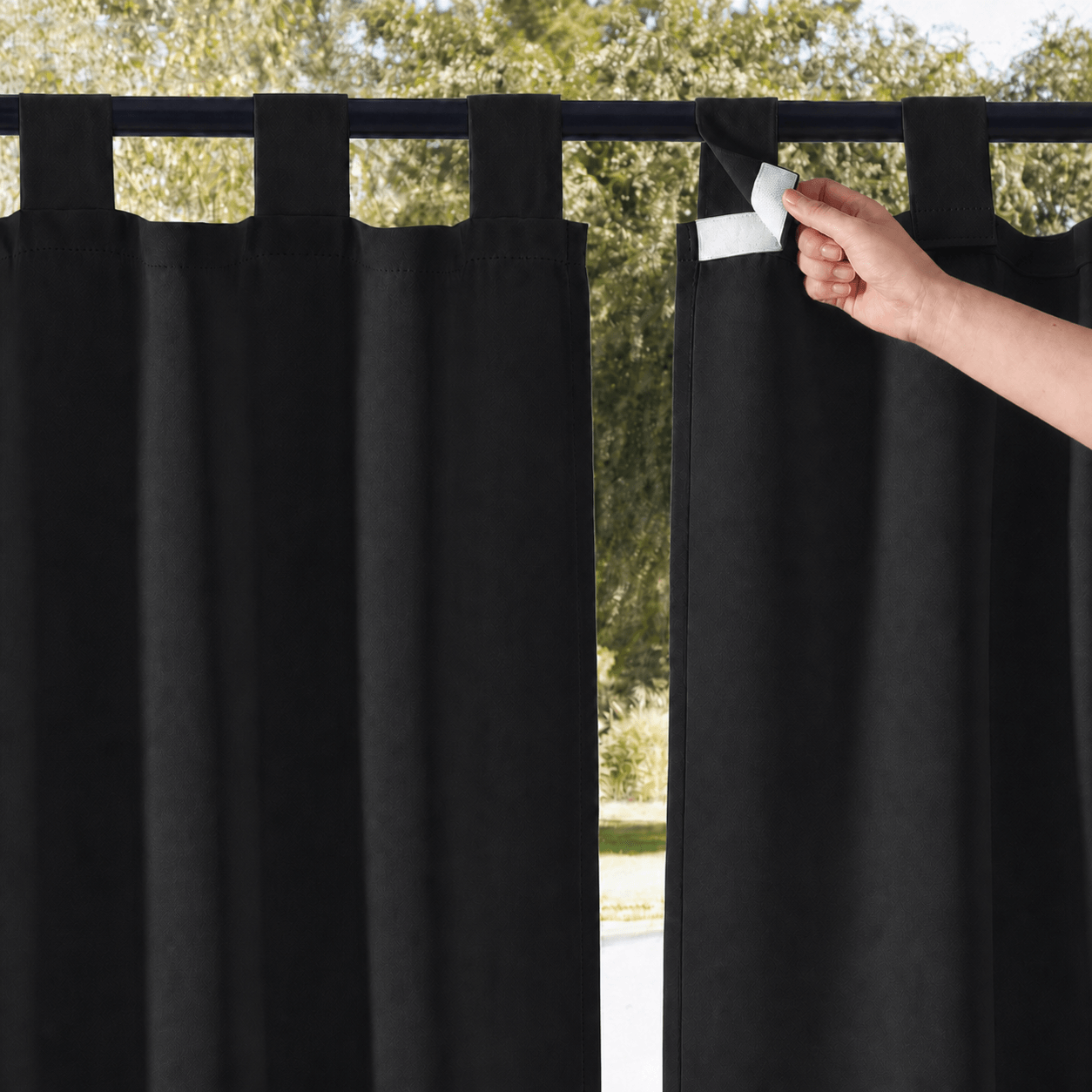
Hardware is part of the measurement. A rod should have secure brackets in suitable structural material and enough length for panels to stack beside the opening. A track needs end stops and enough carriers for the panel style. Before ordering, check the hardware’s weight guidance and make sure grommets, rings, or hooks are compatible with it.
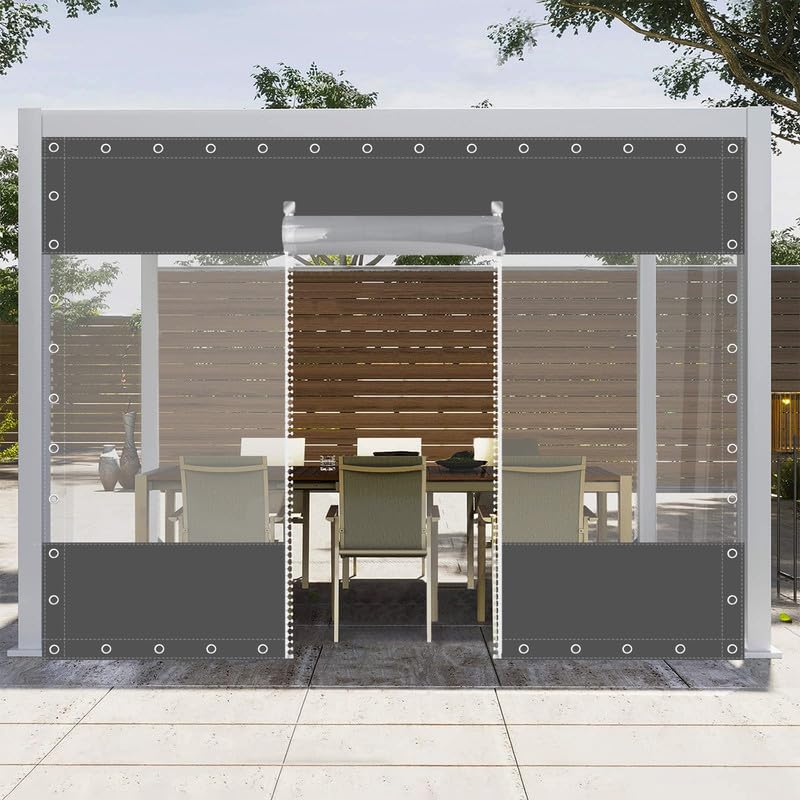
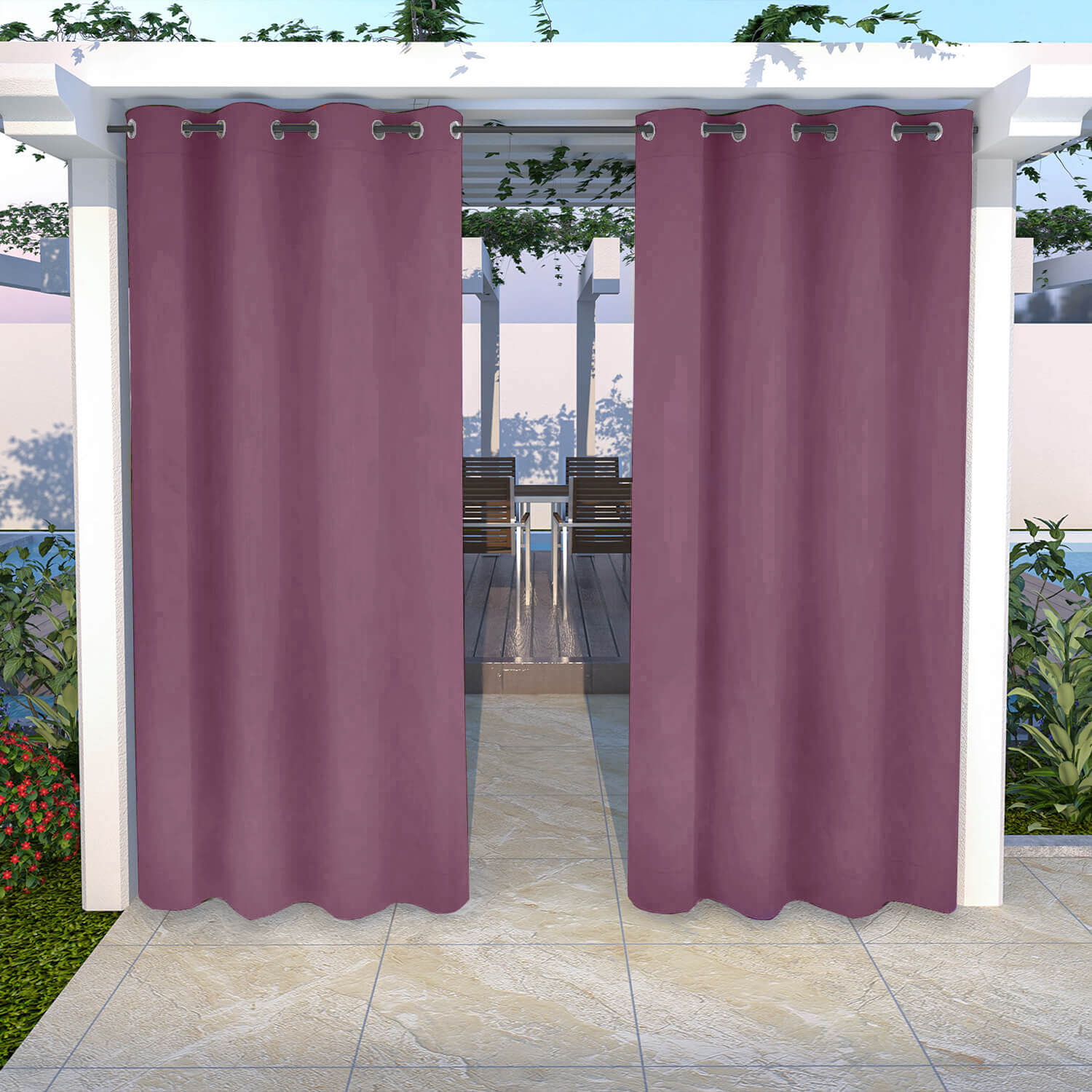
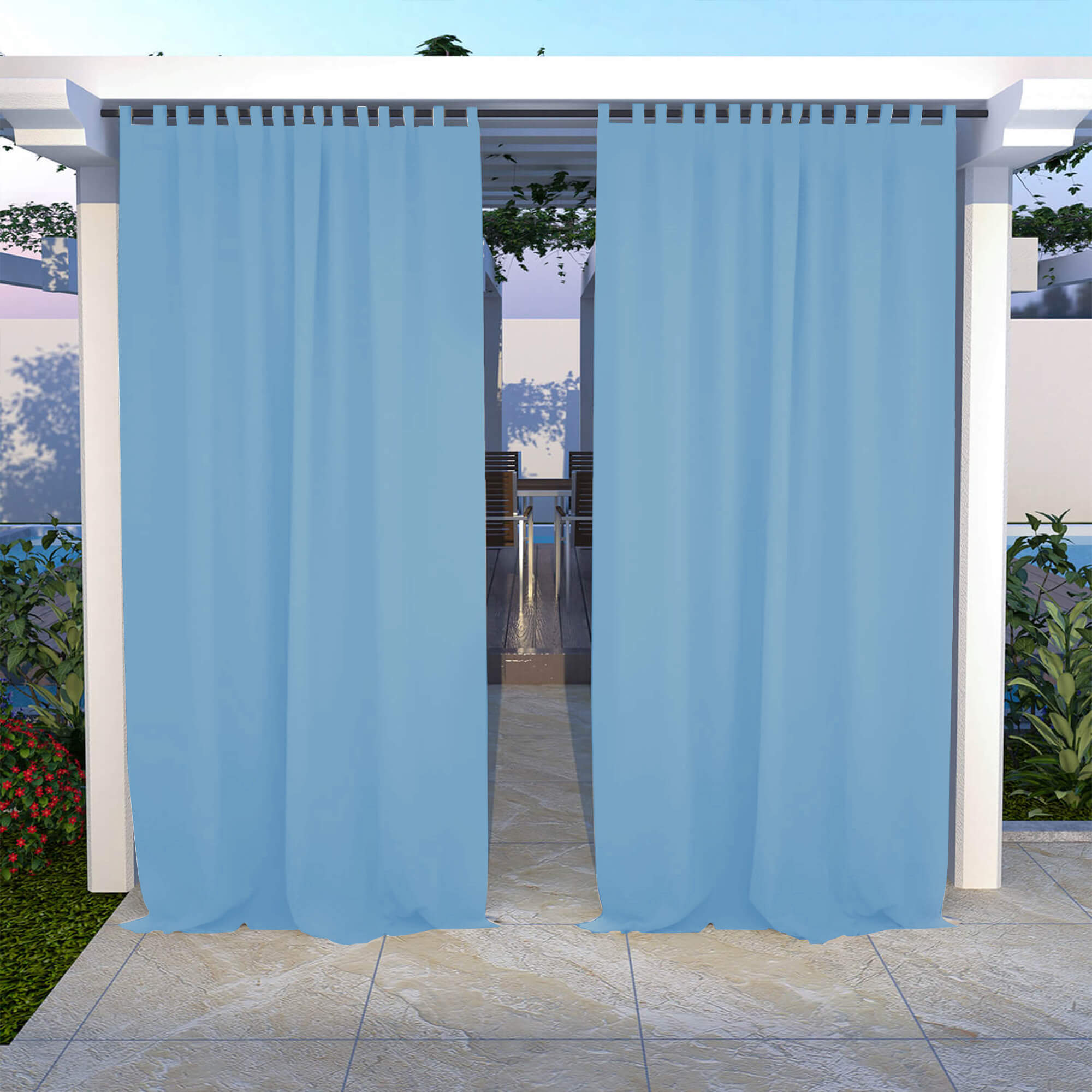
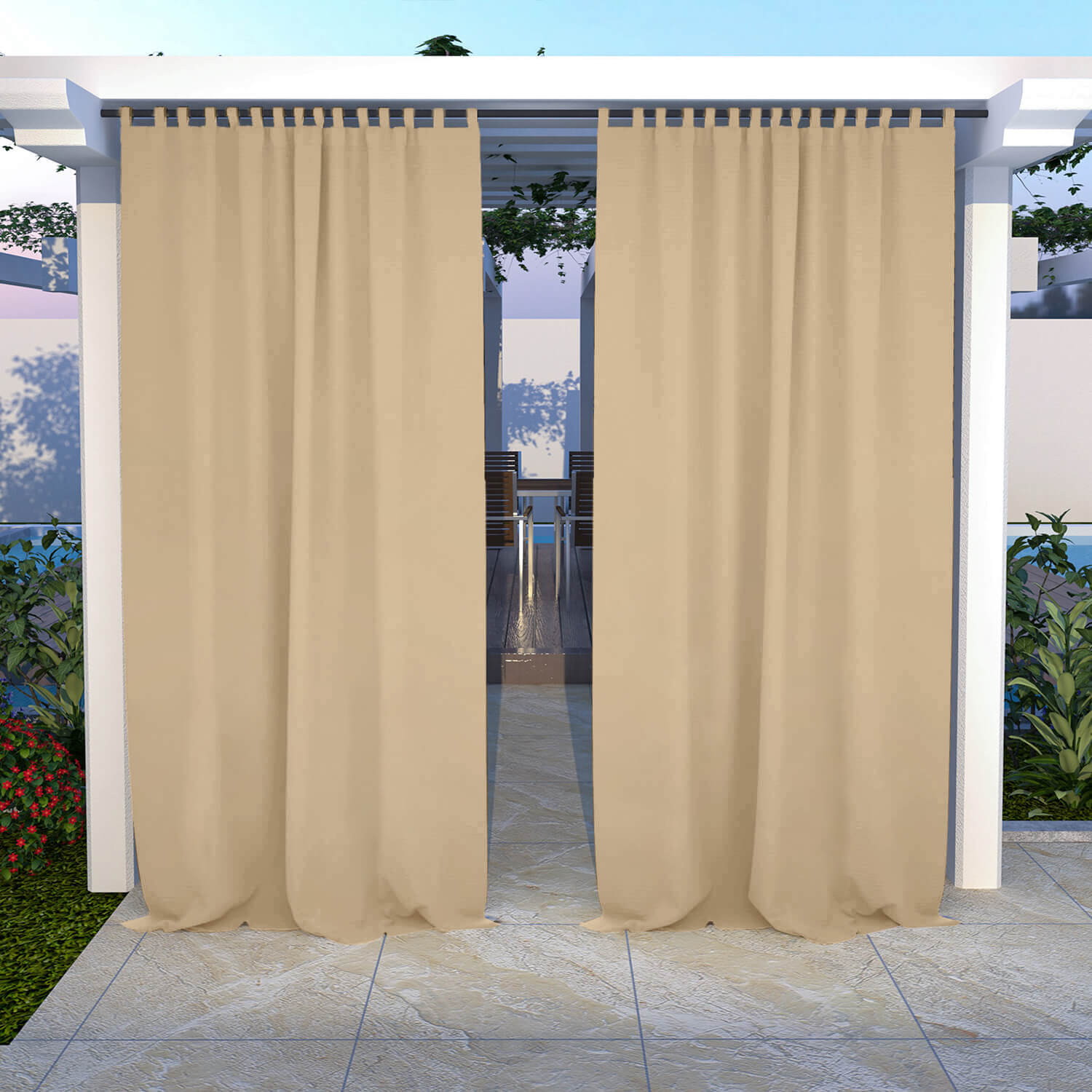
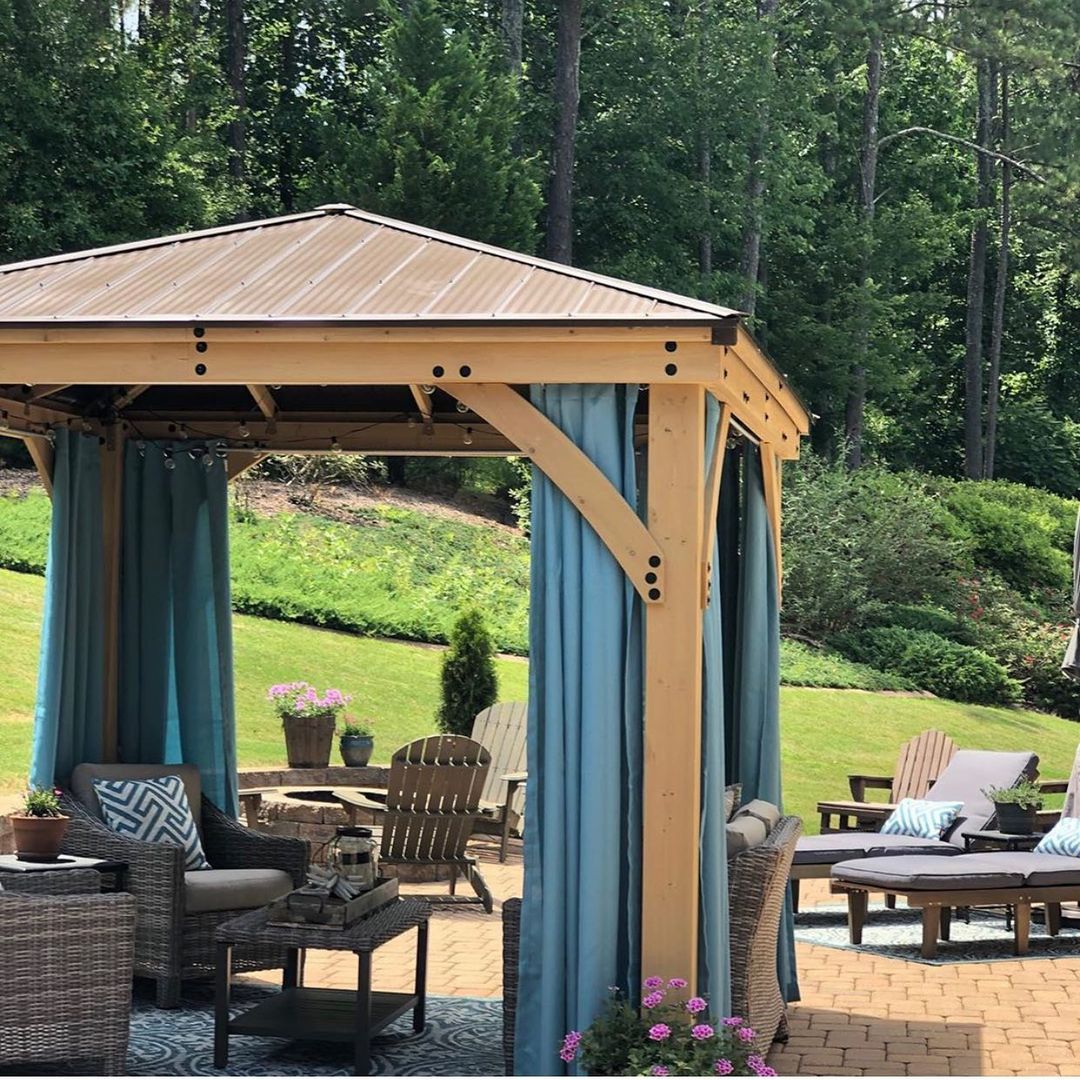
Think through the open position. On the pergola shown above, the blue panels can rest against the posts when tied back, leaving the patio usable. Tiebacks are helpful for routine use, but in strong winds or storms, secure or remove panels according to the product care guidance rather than relying on fabric or hardware to withstand conditions beyond their intended use.
Common pergola opening examples
8-foot opening
An 8-foot opening is 96 inches. Plan roughly 144 to 192 inches of total panel width for 1.5 to 2× fullness. Two to four panels can work depending on the available finished width and where you want them to stack.
10-foot opening
For 120 inches, target about 180 inches at 1.5× fullness. Four medium-width panels often provide useful overlap and make it easier to tie back each side.
12-foot opening
For 144 inches, target about 216 to 288 inches. Consider splitting the opening into more panels so the fabric is easier to open, close, and secure.
FAQ: outdoor curtain sizes for pergolas
Should pergola curtains touch the floor?
They can come close, but a small clearance is more practical outdoors. It helps keep the hem away from water, dirt, and uneven surfaces.
How much fullness do outdoor curtains need?
For most rod-mounted pergola curtains, 1.5 to 2 times the opening width provides a useful balance of coverage and gathering. A flatter track-mounted layout may use less.
How many curtain panels do I need?
Divide your desired total finished width by the usable width of one panel and round up. Add enough width for center overlap and for the side gaps you want to cover.
Should I measure the pergola posts or the rod?
Measure the actual usable hardware span. It may extend beyond the posts, which can reduce side gaps and create a place for open panels to stack.
Ready to size your pergola? Use these measurements, then shop Snowcity Outdoor Curtains for a setup that fits your opening and hardware plan.