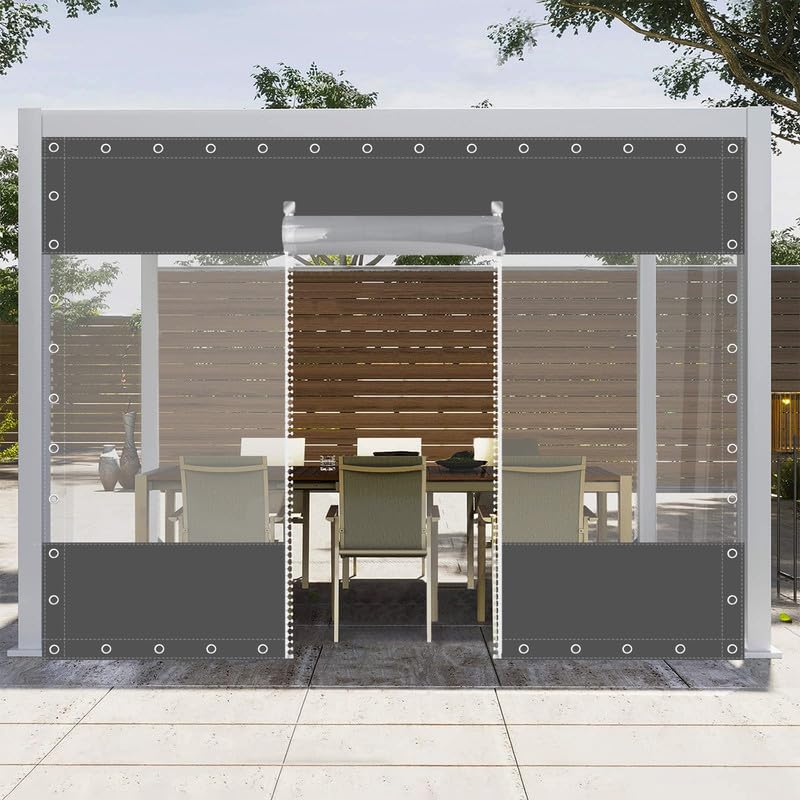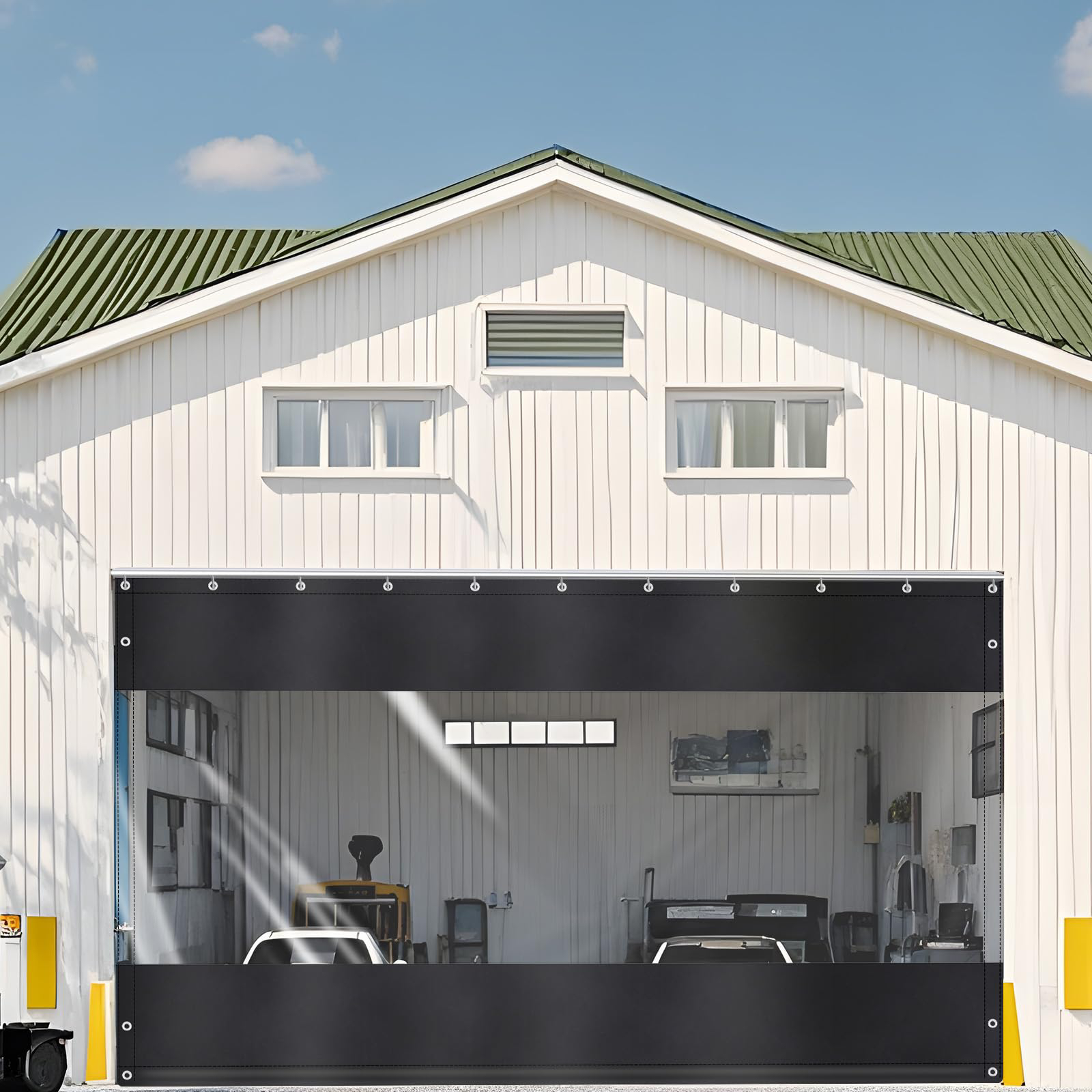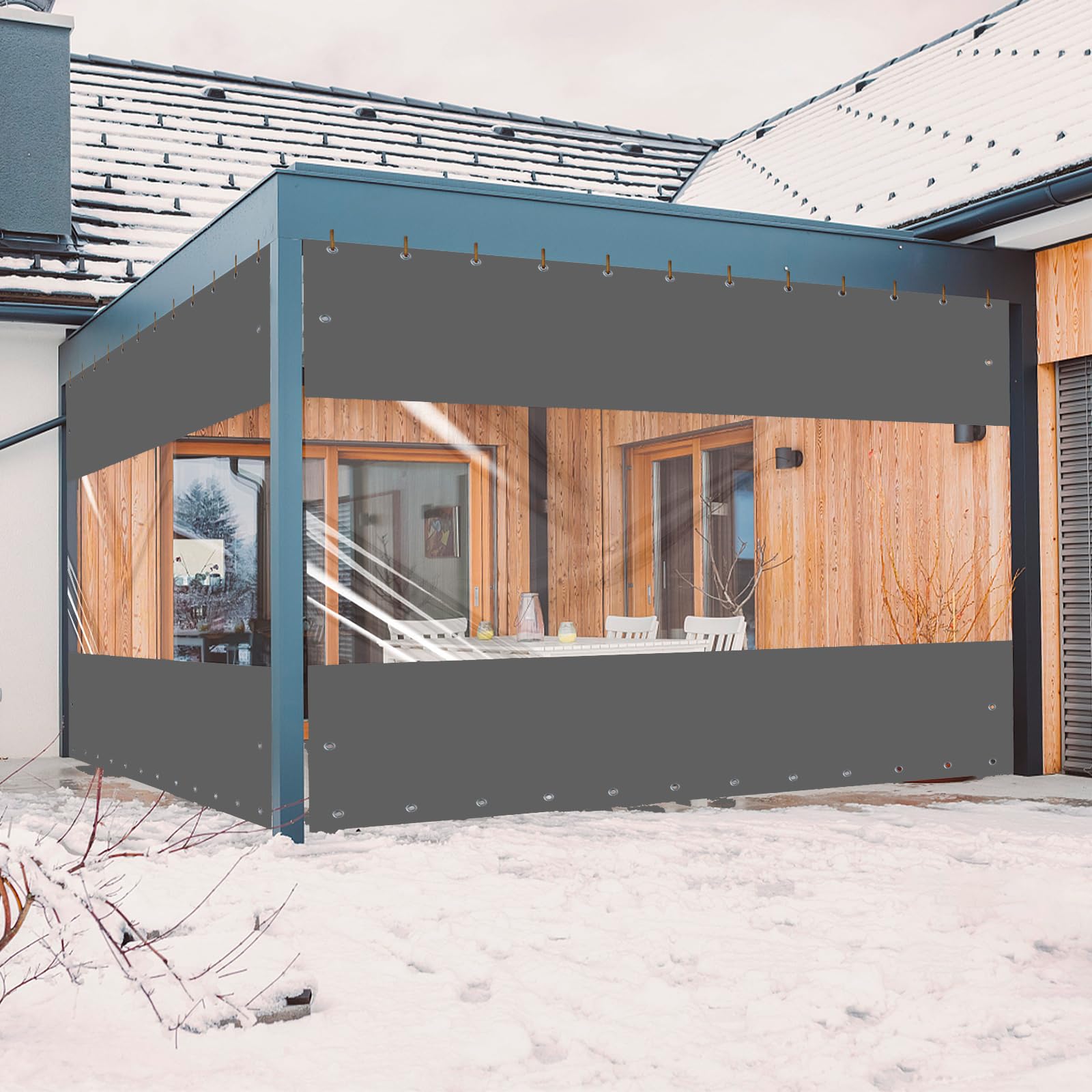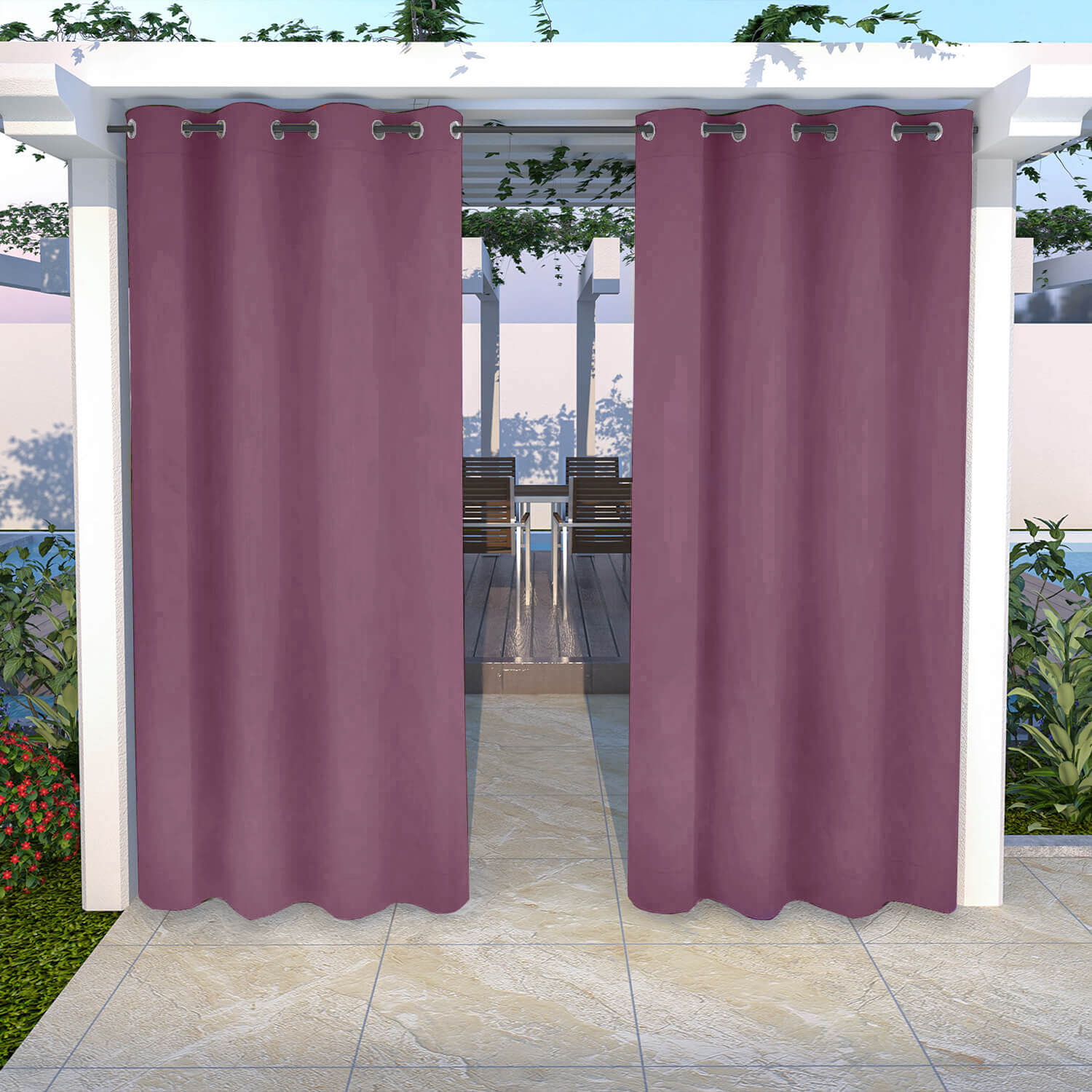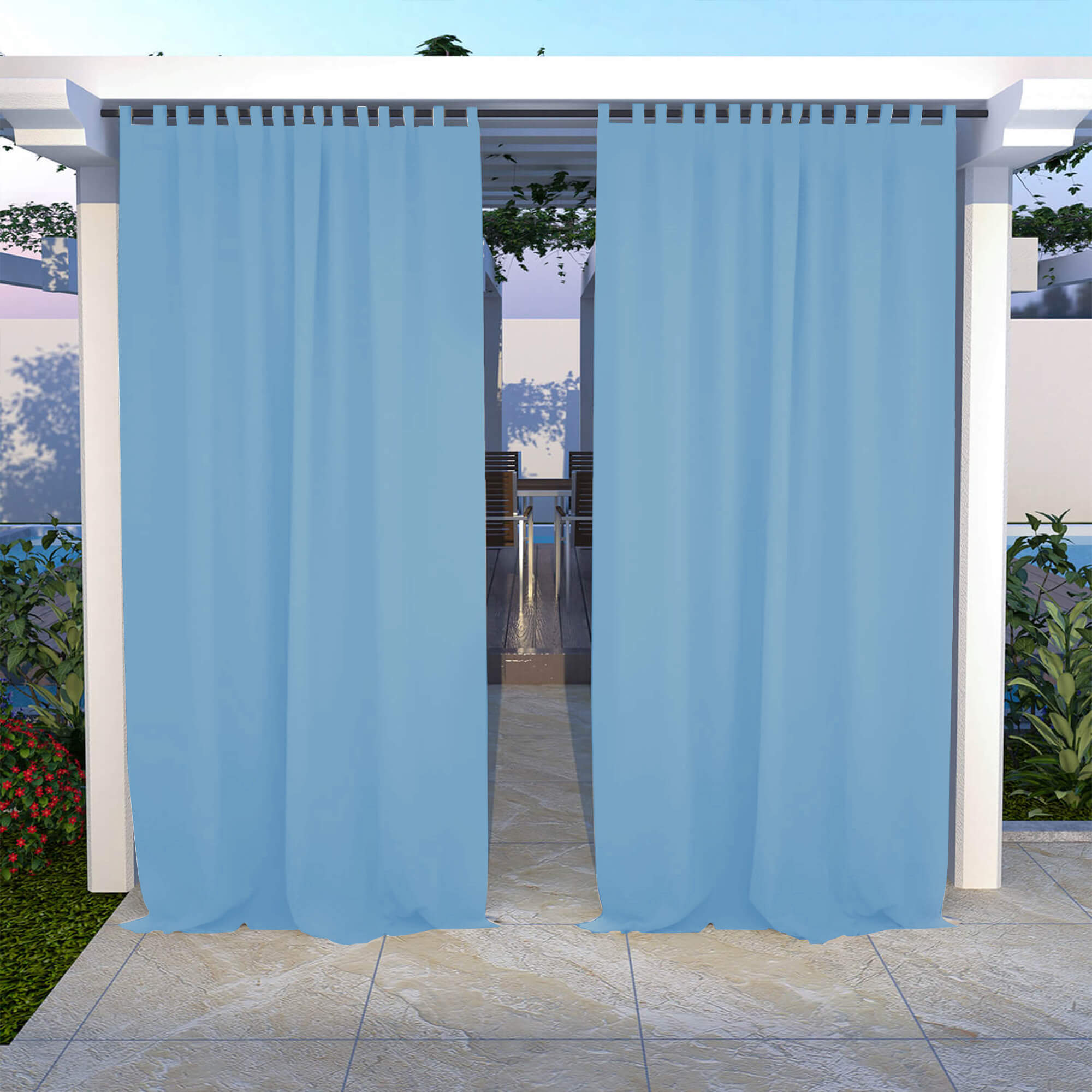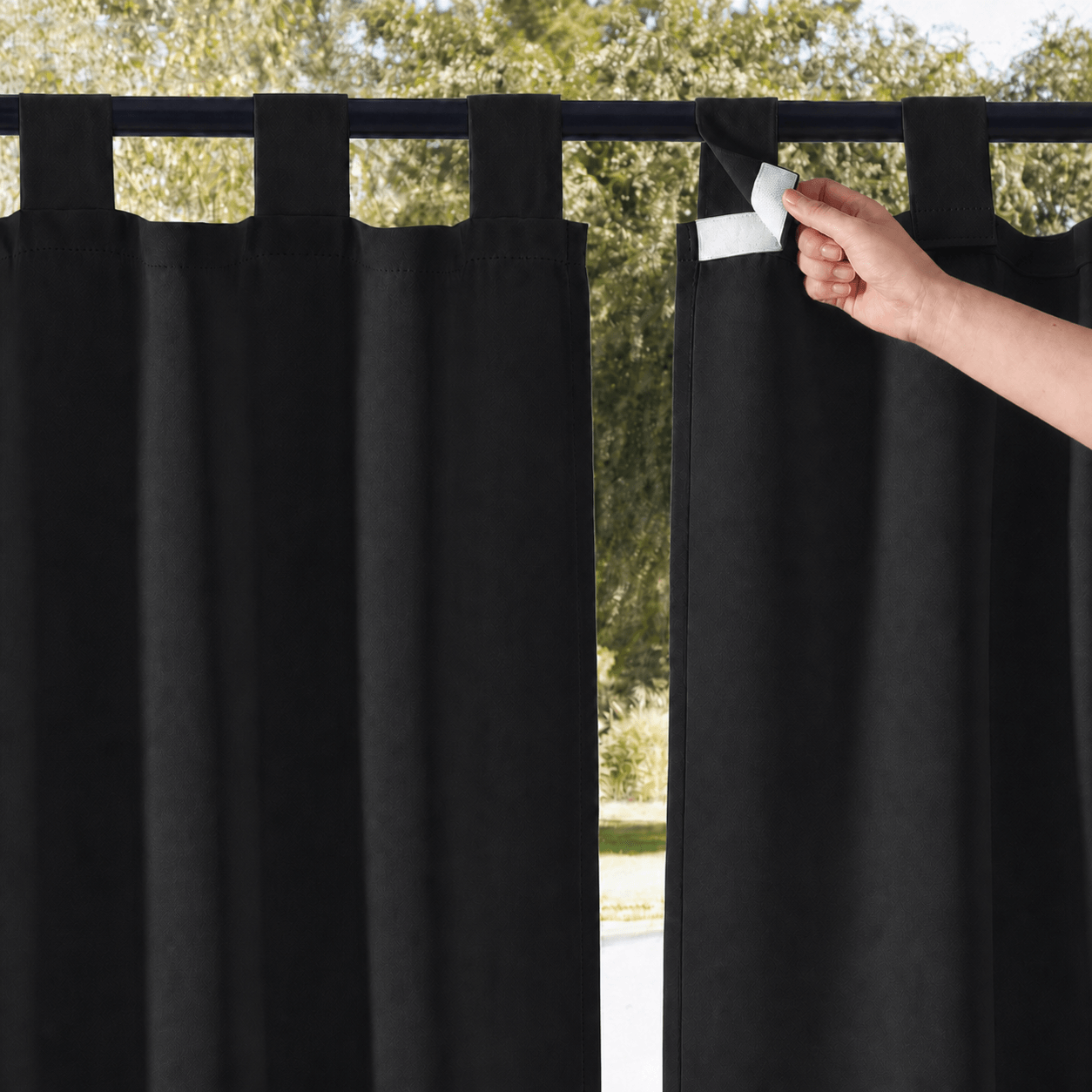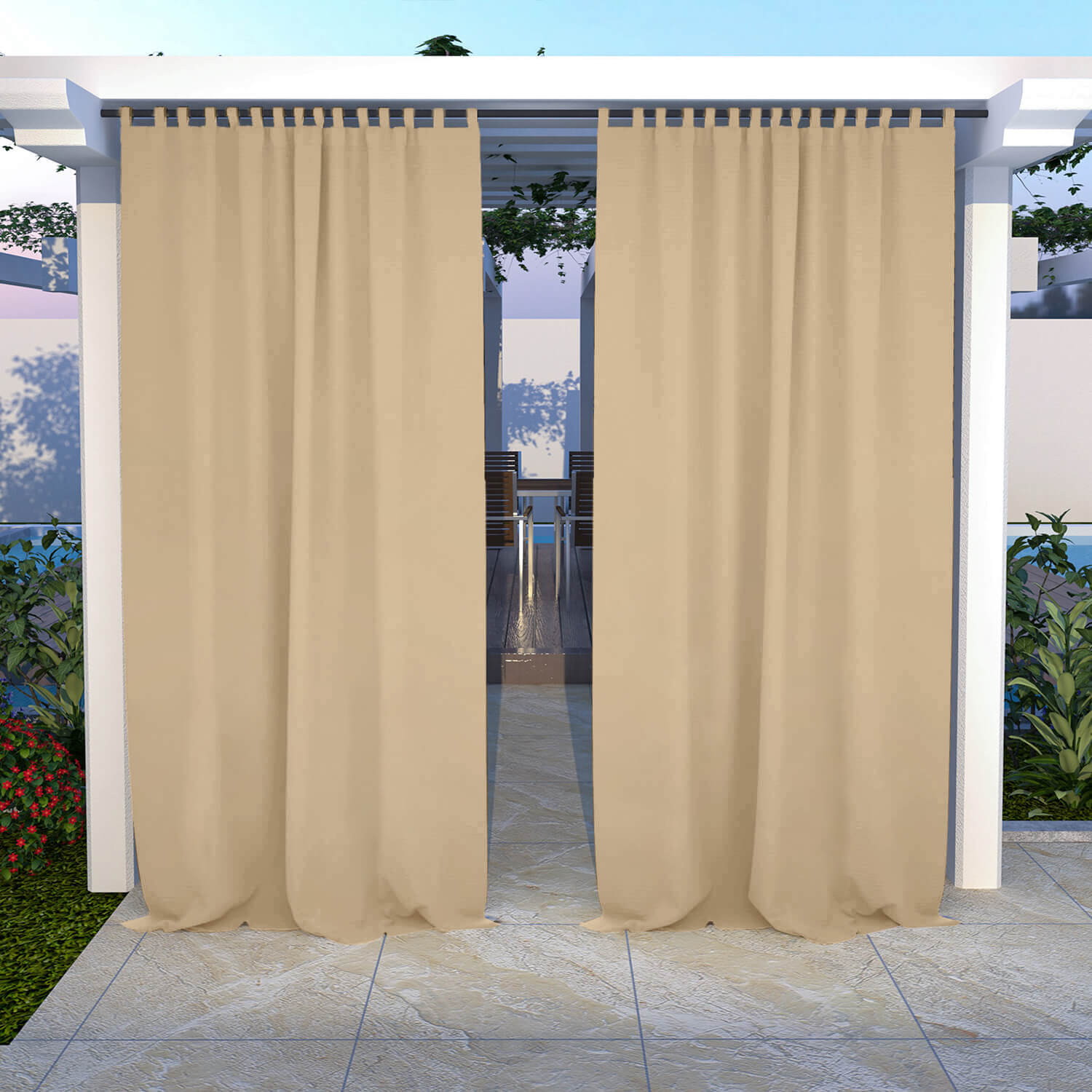
Outdoor blackout curtains can create stronger shade and a more private visual screen than lighter, more open panels. Outside, though, “blackout” should not be read as a promise of an indoor-style dark room. Patios, porches, pergolas, and gazebos usually have open edges, changing sun angles, and light reflected from paving, walls, or nearby surfaces.
The practical goal is to choose the opacity, color, coverage, and hanging setup that make your own seating area feel more comfortable. Here is what to expect before you buy.

Quick answer: are outdoor blackout curtains fully blackout outside?
Usually, no. A blackout-style panel may block substantially more light through the fabric than a sheer or light-filtering panel, but an outdoor area is rarely sealed. Light can enter above a rod, below a hem, between panels, and around the sides. Reflected daylight also remains present even when the panels are closed.
Think of outdoor blackout curtains as a way to reduce direct brightness and increase screening where they cover an opening. They are useful for a sunny side of a pergola or porch, but they do not replace walls, a roof system, or a purpose-built enclosed room.
Indoor blackout and outdoor shade are different jobs
Indoor blackout curtains are often used in a room with fixed walls and a window opening that can be closely covered. Outdoors, the curtain may hang across a wider opening and move with normal airflow. The sun also shifts through the day, so a panel that blocks afternoon light on one side may not address glare from another direction later on.
Before comparing products, look beyond the word “blackout.” Check the available product details for fabric opacity and panel dimensions, then consider where the direct sun enters. Coverage and placement have as much influence on the result as the fabric label.
What blackout means for patio privacy
A more opaque curtain can make it harder to see clearly through the covered area and can give a patio a more sheltered feel from a nearby walkway or yard. Privacy is strongest when panels are wide enough to meet or overlap, are pulled closed, and cover the sightline you want to screen.
Privacy is not absolute in every condition. Light behind the curtain, open sides, gaps at the top, and the viewing angle can all change what is visible. If your space is exposed to breezes as well as neighbors, use secure hardware and follow practical guidance in our outdoor privacy and wind guide.
Why side gaps and installation details matter
Even dense fabric cannot block light that goes around it. Small gaps between two panels can create bright vertical lines; a curtain hung too narrowly may leave the edge of an opening uncovered. A high rod can leave a band of light above the panel, and a short panel can leave light below it.
- Measure the full opening: account for the side you want to shade or screen, not only the clear space between supports.
- Plan enough width: panels that meet or overlap reduce obvious slivers of light and sightlines.
- Use adjustable placement: tiebacks or a workable rod/track layout let you close the sunny side as conditions change.
- Keep weather in mind: draw back or secure panels during strong wind; curtains are not a windproof barrier.
For a closer look at using side panels against low-angle daylight, see our guide to outdoor curtains for sun protection.
Color, opacity, and the feeling of the space
Darker curtains often create a stronger visual screen and can make direct glare feel less intrusive. Lighter colors can keep a covered area looking brighter, but they may allow more visible light depending on the fabric. Color alone does not define opacity, heat reduction, water resistance, or durability, so it should be one part of the decision.
If you want the strongest shade and privacy from a curtain setup, compare the product’s fabric information, choose coverage that fits the opening, and select a color you will be comfortable seeing every day. If an airy look and daylight matter more, a lighter option may be the better compromise.
Best places to use more opaque outdoor curtains
More opaque panels can be a practical fit for a pergola side facing late-day sun, a porch opening near a neighbor, or a gazebo seating area where you want the option to close one side. They work best as an adjustable layer: close them for direct sun or privacy, then open them again for a view and airflow when conditions allow.
They are less suitable when you expect one panel to make an entirely open patio dark, cool the whole space to a specific temperature, or withstand rough wind without being secured. Setting those expectations up front makes it easier to choose a curtain system that fits how you actually use the space.
Choose Snowcity outdoor curtains with clear expectations
Snowcity outdoor curtains give you a flexible way to add stronger shade and everyday privacy at an outdoor opening. Compare dimensions, colors, hanging style, and product-level fabric details with the gaps and exposure of your patio, porch, or pergola. A well-sized darker panel can be a useful screen without pretending an open space is a sealed room.
Shop Snowcity Outdoor Curtains to choose darker outdoor curtains for stronger shade and privacy.
FAQ
Are outdoor blackout curtains fully blackout?
Not in the same way as a closely covered indoor window. They can block more light through the fabric, while outdoor edge gaps, open sides, and reflected daylight can still brighten the area.
Do outdoor blackout curtains help with privacy?
More opaque panels can create a stronger visual screen where they cover a sightline. Privacy also depends on panel width, overlap, gaps, lighting, and viewing angle.
Do side gaps matter with blackout curtains?
Yes. Light and sightlines can pass around or between panels. Measure the opening, allow practical overlap, and position panels for the side you want to cover.
When should I choose darker outdoor curtains?
Choose a darker option when you prefer stronger shade and a more private visual screen. Confirm the fabric and dimensions in the product details rather than assuming color alone guarantees a particular result.