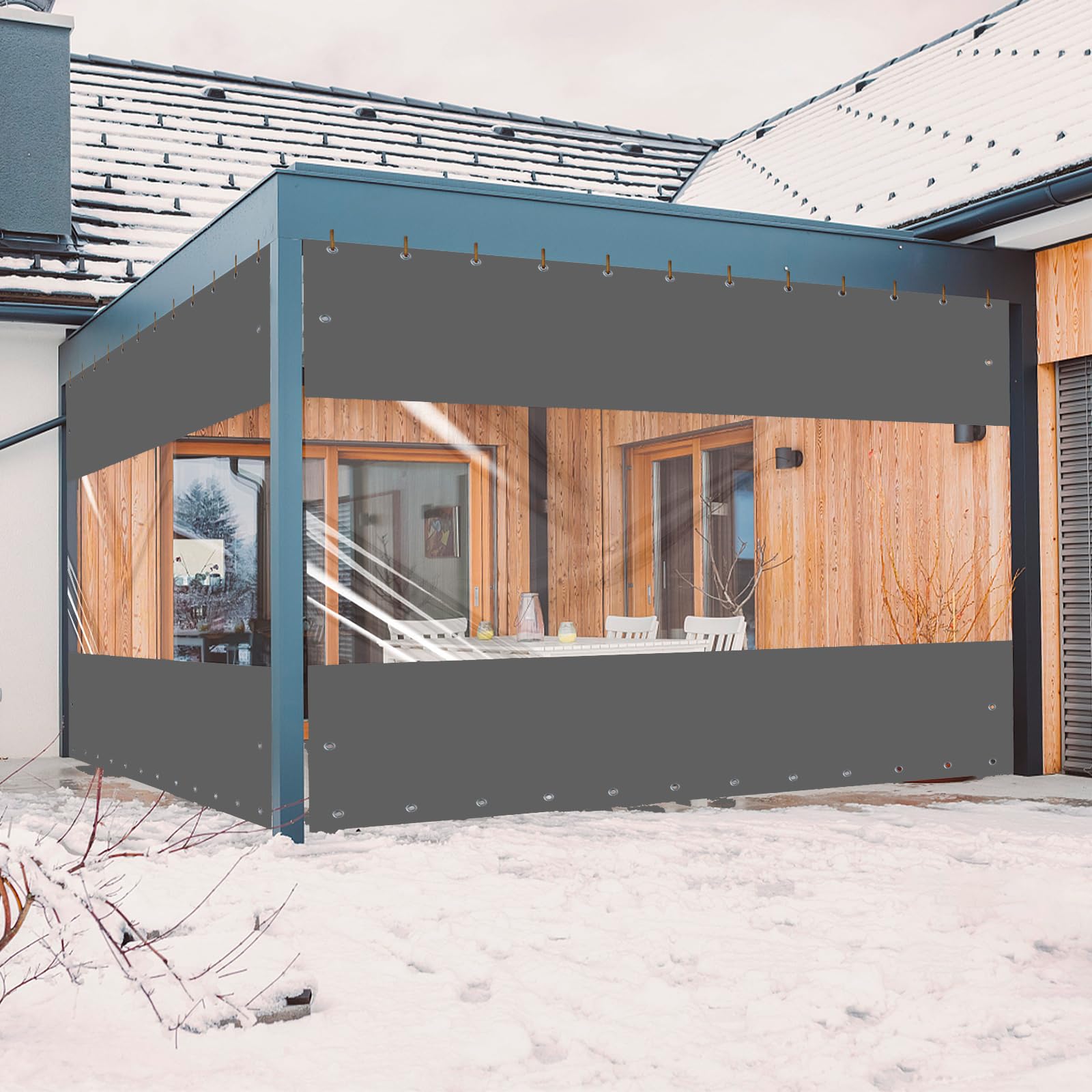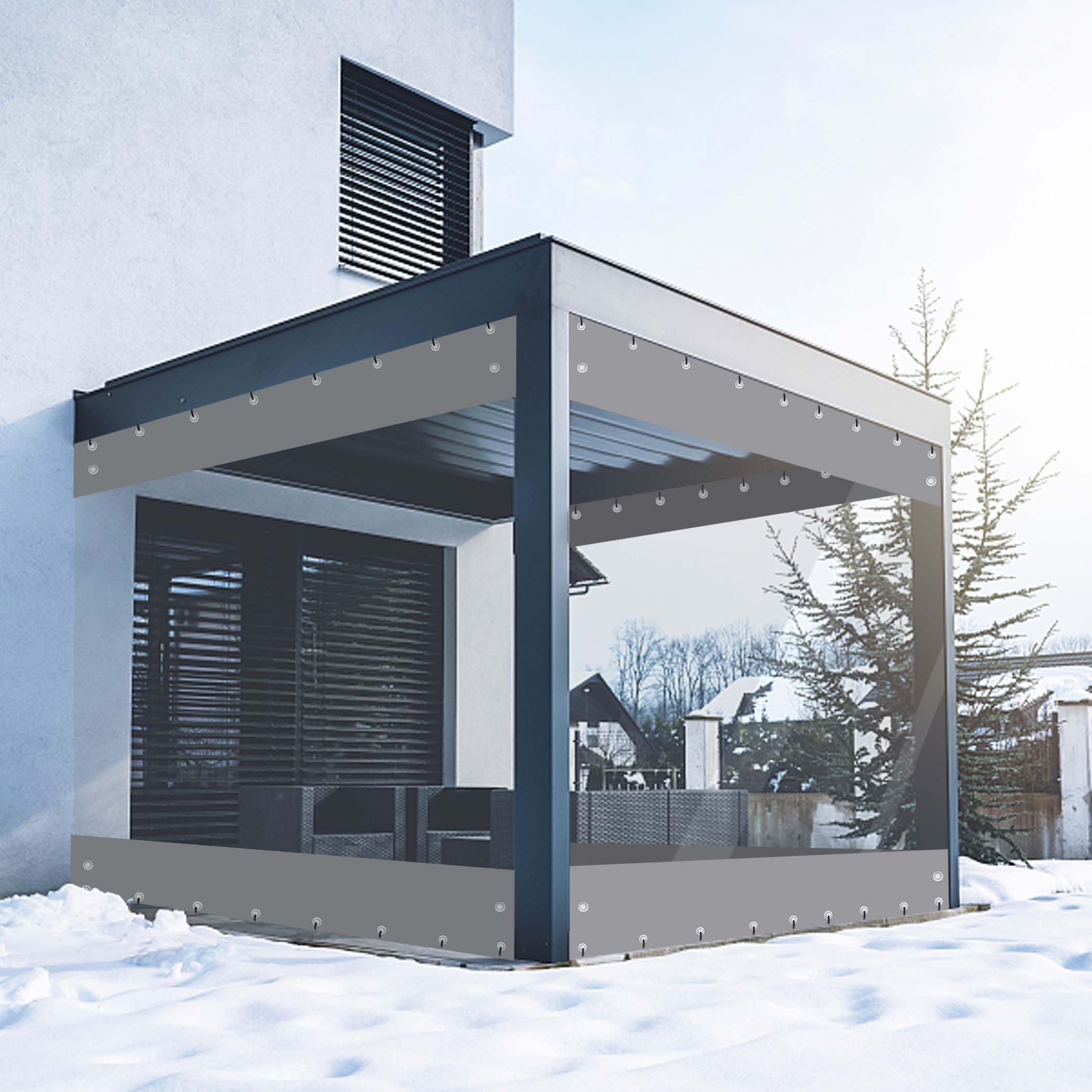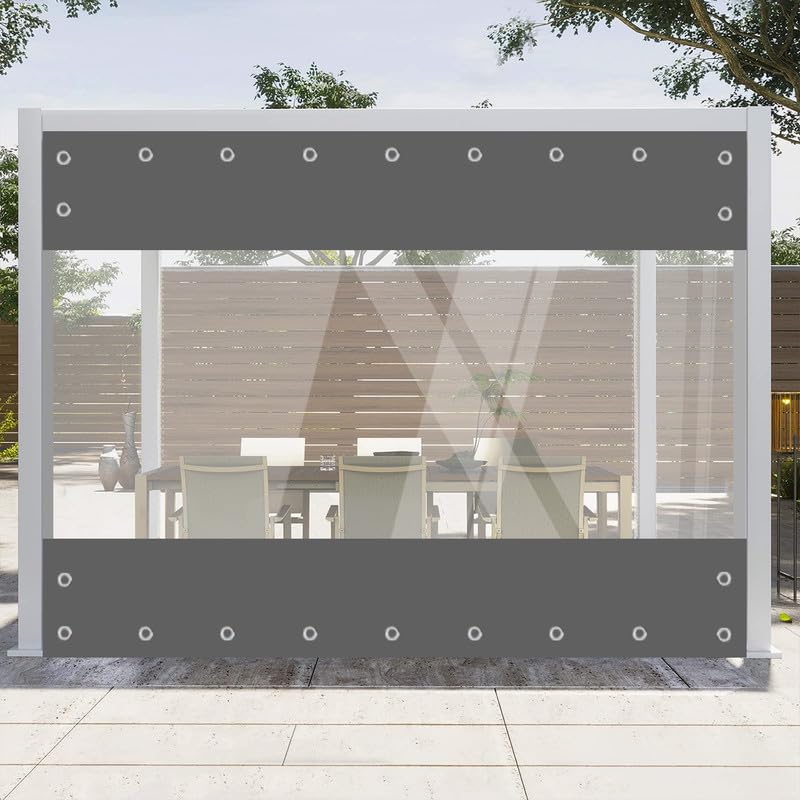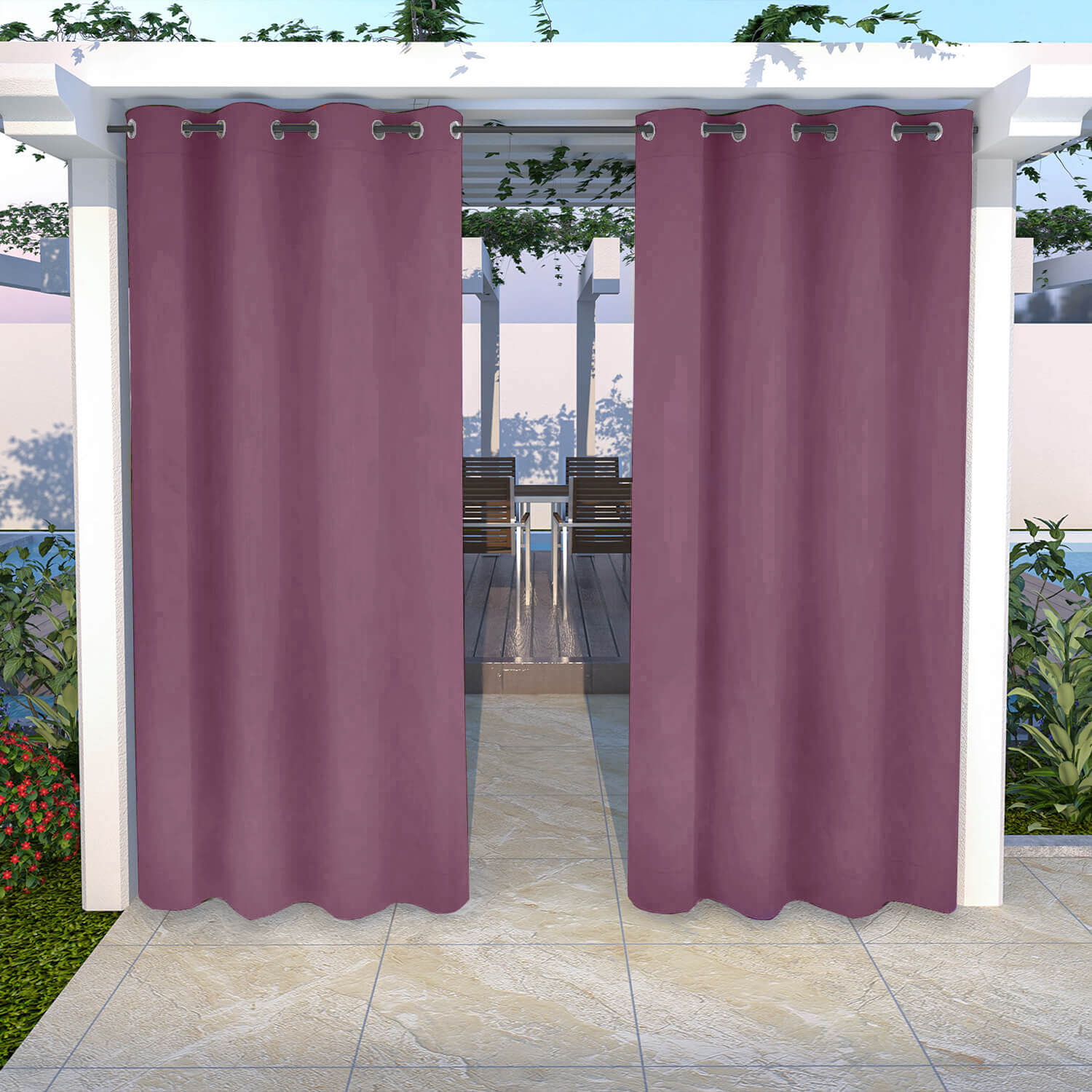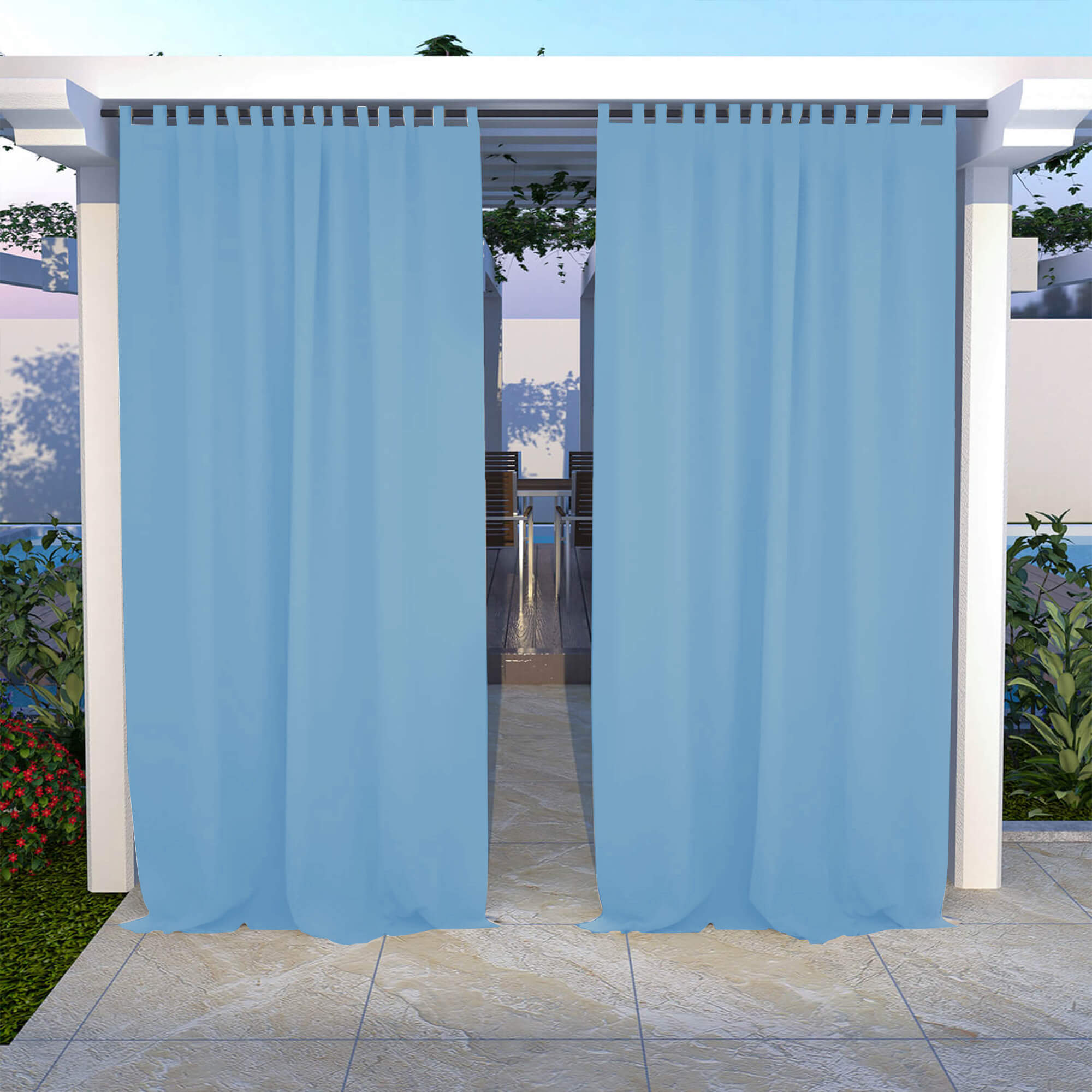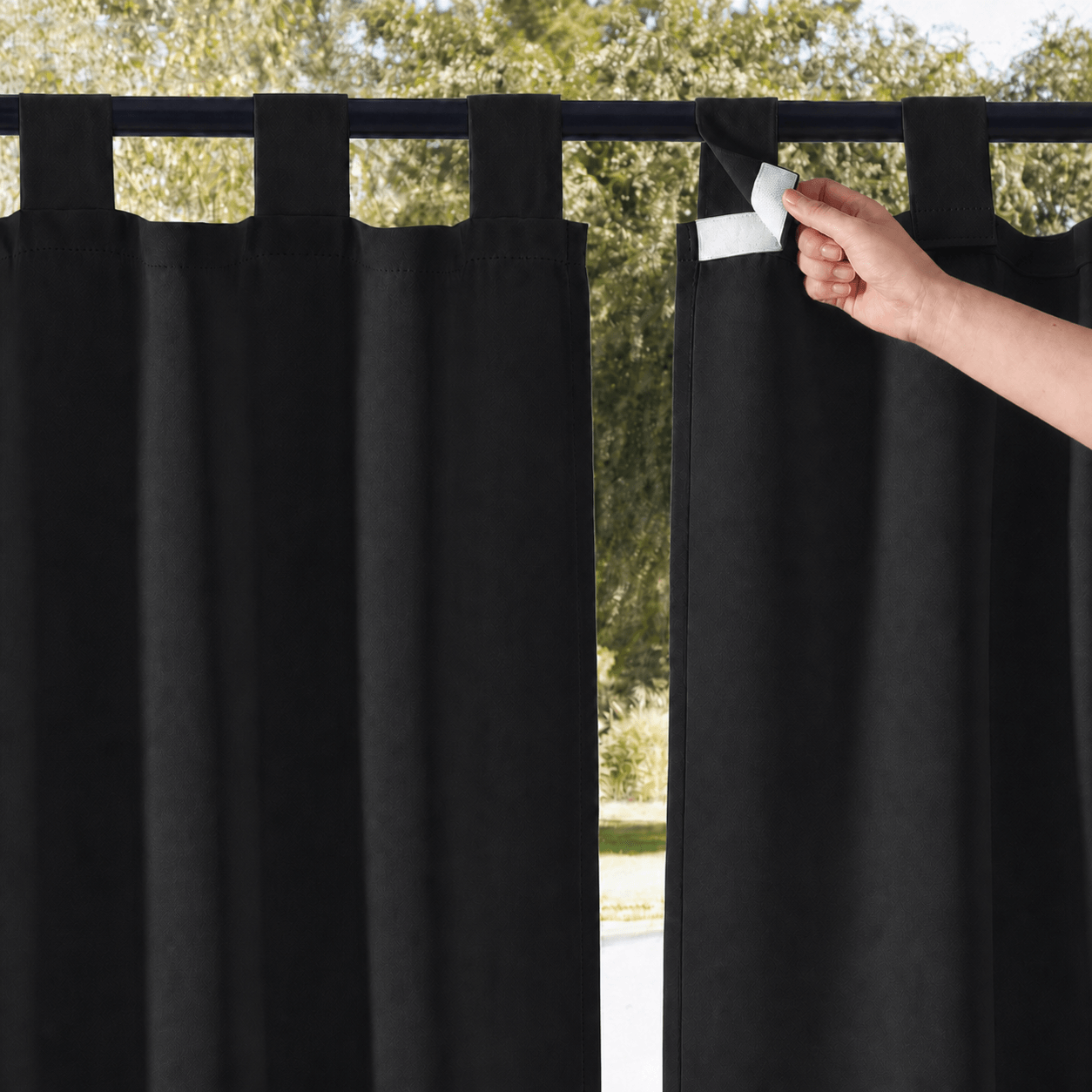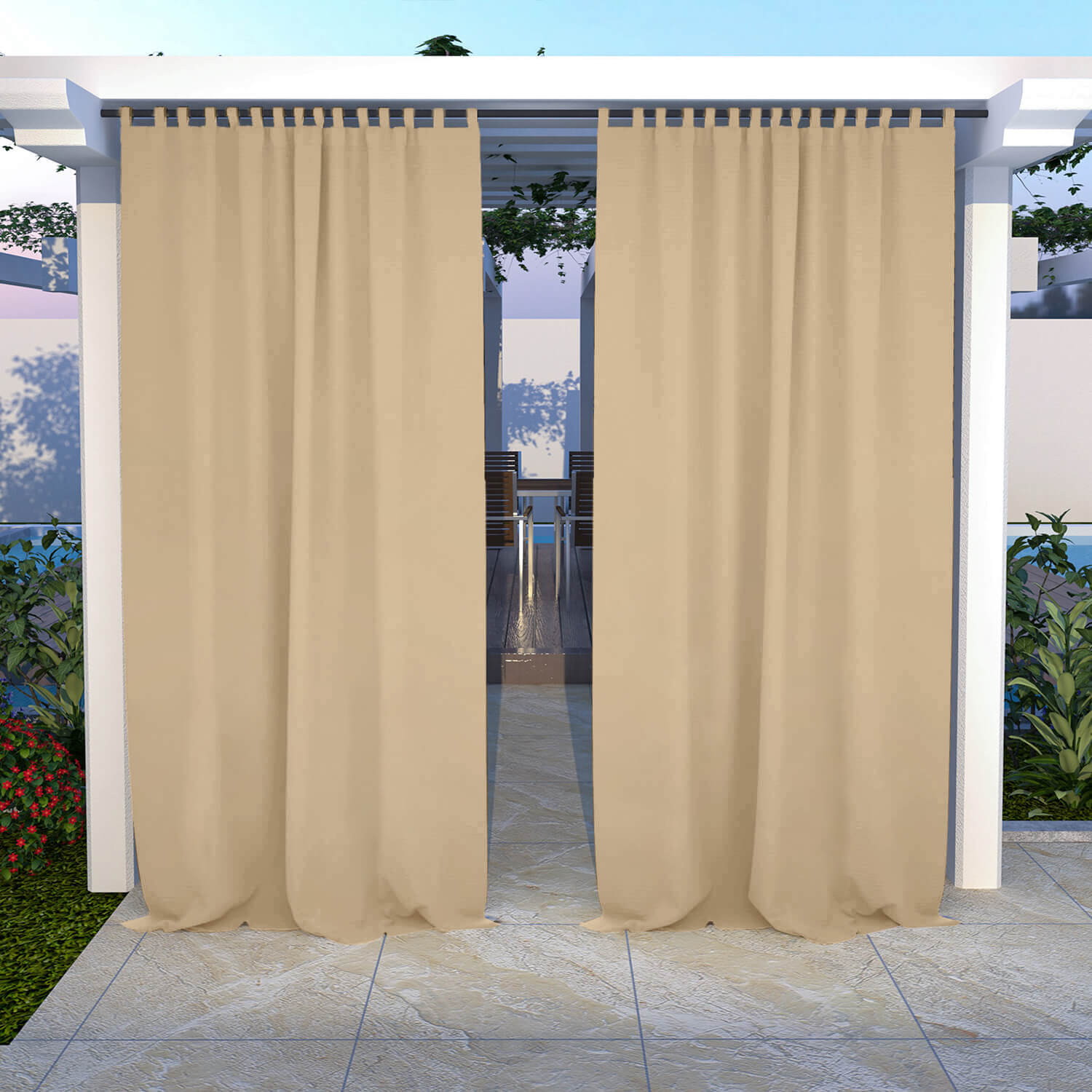
If you are shopping for waterproof outdoor curtains, the first thing to know is this: most outdoor curtains are better understood as water-resistant, not as a complete rain barrier. They are made for everyday outdoor living, including sun, humidity, light rain, and privacy needs, but they are not meant to perform like a tarp, roof, or storm cover.
That difference matters because the right expectation helps you choose better curtains and care for them properly. A good outdoor curtain can make a patio, porch, pergola, or poolside space feel softer and more private. It can handle occasional wet weather. But after rain, it still needs airflow and time to dry.

Quick Answer: Are Outdoor Curtains Truly Waterproof?
Some outdoor curtain listings use the word waterproof, but in real patio use, most fabric curtains should be treated as water-resistant. That means they can repel or slow down water for a period of time, especially during light rain or splash exposure, but they are not designed to block continuous rain the way a waterproof membrane would.
Water-resistant outdoor curtains are still useful. They are a smart choice when you want:
- More privacy on a patio, porch, balcony, pergola, or gazebo.
- Shade and UV reduction during bright outdoor hours.
- A softer, more finished look around an outdoor living area.
- Fabric that can stay outside through normal weather changes.
- Panels that can recover well after light rain when dried properly.
The key is not to expect outdoor curtains to seal a space from rain. They are fabric panels for comfort, shade, privacy, and flexible coverage.
Waterproof vs Water-Resistant: What Is the Difference?
Waterproof usually means water cannot pass through a material under normal use. True waterproof materials are often coated, laminated, sealed, or built with special barriers. Think rain jackets, tarps, roof membranes, or heavy-duty covers. These materials are made to stop water, but they may feel stiff, noisy, less breathable, or less curtain-like.
Water-resistant means the fabric can resist moisture, shed some water, or slow absorption. Water may bead up at first, and light rain may roll off or dry without issue. But if rain is heavy, wind-driven, or long-lasting, moisture can eventually soak into the fabric or pass through seams, grommet areas, hems, or folds.
For outdoor curtains, water-resistant is often the more realistic and useful feature. A curtain still needs to hang naturally, move with airflow, tie back neatly, and feel suitable for a living space. A completely waterproof curtain may protect better from water, but it may not give the same soft patio look or everyday usability.
Where Water-Resistant Outdoor Curtains Work Well
Water-resistant outdoor curtains work best in spaces that need comfort and privacy more than full rain protection. They are especially helpful for covered or partially covered areas where the roof, eaves, pergola canopy, or surrounding structure already blocks some direct rain.
Common good-fit spaces include:
- Covered patios: curtains soften side light, add privacy, and can stay more protected from direct rainfall.
- Porches: panels can help screen views from neighbors or the street while keeping the space relaxed.
- Pergolas: curtains add a flexible wall effect for shade, dining, lounging, or entertaining.
- Gazebos: panels help define the structure and make it feel more like an outdoor room.
- Poolside seating areas: curtains can create shade and privacy while handling splash and humidity.
In these spaces, the curtain is not doing the job of a wall. It is giving you a flexible layer: open when you want the view, closed when you want shade, privacy, or a calmer feeling.
Where Outdoor Curtains Should Not Be Overpromised
Outdoor curtains should not be treated as storm protection. During heavy storms, strong wind, hail, or long rain events, fabric panels can become heavy, twist around rods, pull against grommets, or stay wet longer than you want. If the forecast is severe, tie them back securely or remove them and store them until the weather passes.
It is also important to remember that water can reach curtains in several ways:
- Direct rainfall on open patios.
- Wind-driven rain under a roofline.
- Sprinkler spray or pool splash.
- Moisture collecting in folds when panels are tied too tightly while wet.
- Water pooling along the bottom hem if the curtain drags on the floor.
This is why installation and care matter as much as the fabric itself. A water-resistant curtain performs better when it has good airflow, proper clearance from the ground, and a place to hang freely while drying.
Can Outdoor Curtains Stay Outside in Rain?
Yes, outdoor curtains can usually stay outside during normal light rain or occasional wet weather, especially if they are installed in a covered or semi-covered area. Afterward, let them hang open so air can move through the fabric. Avoid leaving wet curtains tied tightly in a bundle for long periods, because trapped moisture can slow drying and may lead to odors, mildew, or staining over time.
If the rain is heavy or the weather turns windy, it is better to secure the panels. Use tiebacks, bottom anchors, weights, or a lower rod if your curtain style supports it. For severe weather, taking the panels down is the safest option.
How to Help Outdoor Curtains Dry After Wet Weather
After rain, the goal is simple: give the fabric airflow and avoid trapping moisture. These habits help extend the life of your curtains:
- Untie the panels after rain so wet folds can open.
- Let the curtains hang freely until fully dry.
- Keep the bottom edge from sitting in puddles or wet soil.
- Brush off leaves, pollen, or dirt before they stick to damp fabric.
- Spot clean when needed instead of waiting for stains to set.
- Store curtains dry if you take them down for the season.
For a deeper maintenance routine, use our outdoor curtain cleaning and storage guide. If you are still choosing your setup, start with our patio curtain buying guide.
What to Do Before Heavy Storms
Outdoor curtains are at their best in normal outdoor conditions, not severe weather. Before heavy storms, take a few minutes to protect both the curtains and the hardware.
- Close and tie panels neatly if the wind will be moderate.
- Use bottom grommets, anchors, or weights if your curtain design includes them.
- Remove panels from rods before high wind, hail, tropical storms, or hurricanes.
- Make sure curtains are fully dry before folding them for storage.
- Check rods, brackets, and screws after major weather events.
This is not about being overly careful. It is about treating outdoor curtains like flexible fabric decor rather than permanent weatherproof construction.
Choosing Snowcity Outdoor Curtains
Snowcity outdoor curtains are a practical option when you want shade, privacy, and a more finished outdoor room feeling without committing to a permanent wall or custom contractor project. They are designed for everyday patio living: soft enough to look like curtains, durable enough for outdoor use, and easy to open, close, tie back, and style around your space.
If your main goal is daily comfort, privacy, and sun control, choose water-resistant outdoor curtains and care for them properly after rain. If your main goal is stopping heavy rain from entering a space, you may need a different solution, such as a roof extension, roll-down weather screen, exterior shade system, or storm-rated cover.
Shop Snowcity outdoor curtains for everyday patio shade, privacy, and flexible outdoor living.
FAQ
Are waterproof outdoor curtains really waterproof?
Most outdoor curtains should be treated as water-resistant rather than fully waterproof. They can handle light rain and moisture better than indoor curtains, but they are not a sealed rain barrier.
What does water-resistant mean for outdoor curtains?
Water-resistant means the fabric can repel or slow water absorption. It may shed light rain, but prolonged or wind-driven rain can still wet the fabric.
Can I leave outdoor curtains outside all summer?
Yes, in normal weather, especially in covered or partially covered areas. Let them dry after rain and secure or remove them before severe weather.
How do I keep outdoor curtains from mildew after rain?
Open them up after wet weather, let air move through the fabric, keep the bottom edge out of standing water, and store them only when fully dry.
Should I remove outdoor curtains during storms?
For heavy wind, hail, tropical storms, hurricanes, or long periods of severe rain, removing the curtains is the safest choice.