How to Reduce Gaps Around Clear Vinyl Outdoor Curtains
Oct 17,2026 | Snowcity
A small gap around an outdoor clear vinyl curtain can be more noticeable than expected. The practical goal is not to promise a perfectly sealed opening in every installation. It is to measure the opening carefully, plan overlap where it is useful, and give the panel a clear route for hanging and everyday access.
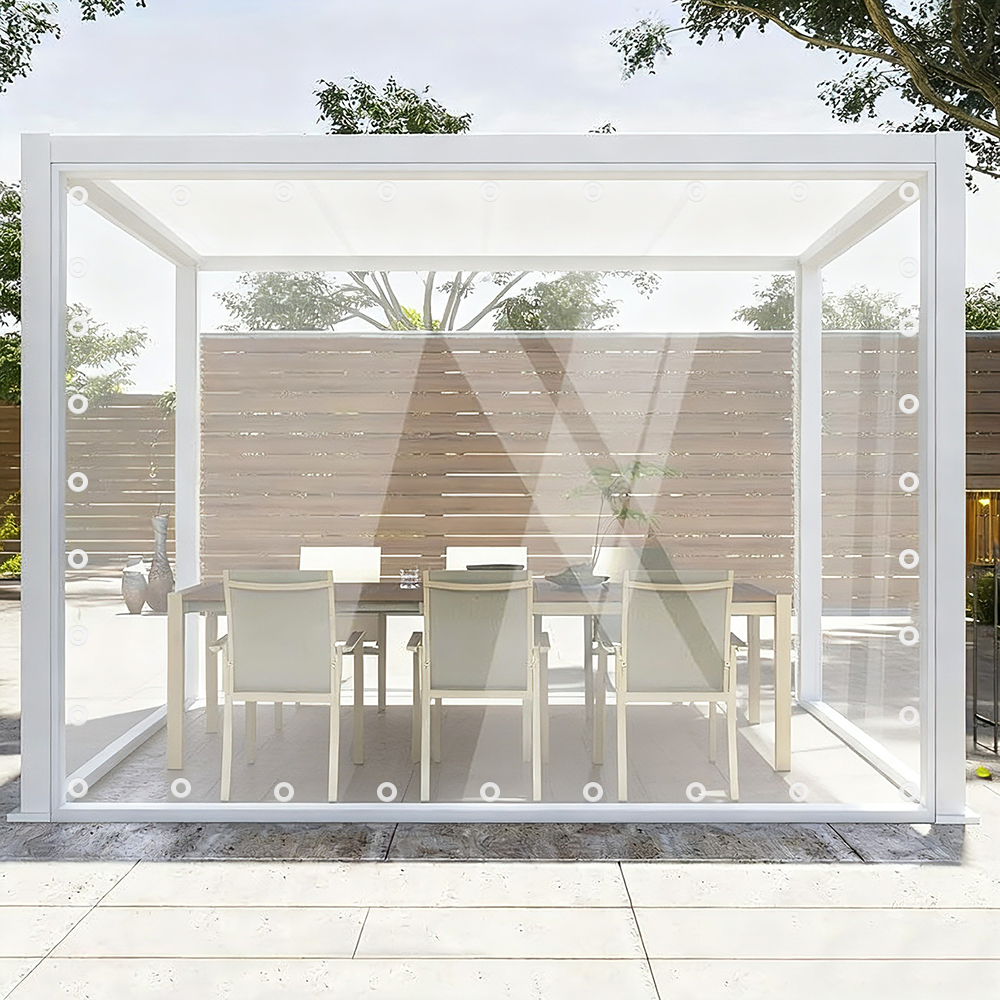
Start by reviewing Snowcity's outdoor clear vinyl curtains collection. Compare the finished opening—not only the space between posts—with the panel size, the mounting surface, and the route people will use to enter or leave the area.
Measure the finished opening at several points
Take the width near the top, middle, and bottom, then measure the drop on both sides. Posts, railings, siding, and concrete surfaces are not always perfectly square, so one measurement may not describe the whole opening. Record any trim, handles, latches, or beams that change where a panel can sit.
It is also useful to decide which edge is the reference edge before ordering. A curtain may hang from a top rail, stop beside a post, or overlap an adjacent panel. Planning that relationship in advance makes it easier to choose a size that suits the actual mounting area rather than just the largest raw dimension.
Plan overlap instead of relying on edge-to-edge coverage
Where two panels meet, a considered overlap can reduce the visual opening between them as they hang and move. The right amount depends on the panel layout, attachment points, and access needs. Do not pull a panel tightly simply to erase every irregularity; concentrated tension can make alignment harder and may place unnecessary strain on a grommet or corner.
At the sides, consider whether a panel should meet a post, a wall return, or a separate attachment strip. Keep the mounting path smooth and free of sharp edges. If the panel must pass a railing or a latch, include that clearance in the layout rather than forcing the material around an obstacle.
Set the bottom clearance for the site
Bottom clearance is a site-specific choice. A deck, threshold, uneven paving, or an area that needs frequent sweeping may call for a different approach than a level patio slab. Check the surface along the full width, not only in the center, and leave enough room for the panel to move without continually catching on the ground.
Before finalizing fasteners, hang the panel temporarily if your mounting method allows it. Step back and look for an edge that pulls diagonally, a bottom that drags, or a corner that cannot reach its attachment point naturally. Correcting the layout at this stage is usually simpler than adding force after all hardware is fixed.
Keep frequent-entry routes workable
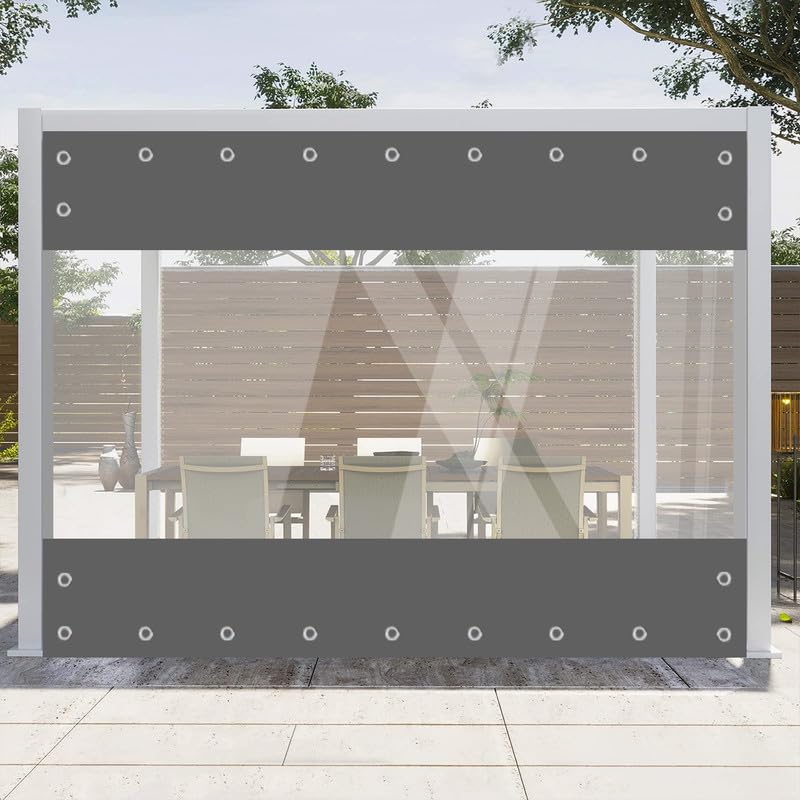
For an opening used regularly, plan the access route as part of the gap strategy. Snowcity's current clear vinyl panel with zippered entry lists multiple size options and Custom Size support. Its product page identifies a 20oz clear PVC center panel, 24oz reinforced vinyl at the top and bottom, anti-rust metal grommets, and dual zippered entryways. Those current product details can help when you need a panel layout that considers both coverage and access.
Check how a person will approach the opening while carrying chairs, packages, or tools. Keep the zipper route clear of furniture and avoid placing an attachment point where it interferes with a handle or hinge. Test the intended opening and closing motion after hanging, then make measured adjustments to the surrounding attachments if needed.
Inspect the fit after use
Revisit the installation after the first few openings and closings. Look for fasteners that have shifted, an edge that rubs, or a gap that appeared because a panel settled differently than expected. A careful review of the mounting surface, overlap, and bottom clearance gives you a sound basis for adjustments without assuming that one setup will suit every outdoor space.
Choose an entry panel after measuring the full opening.
Comment