Grommet Insulated Outdoor Curtains: Header and Bottom Options
Sep 14,2026 | Snowcity
When you are choosing grommet insulated outdoor curtains, the header and bottom style affect more than appearance. They determine how the panel slides, where it can be secured, and how practical it feels to open or close through winter. Start with the Snowcity Insulated Outdoor Curtains for Winter collection, then compare the configuration with your actual rod, frame, and daily routine.
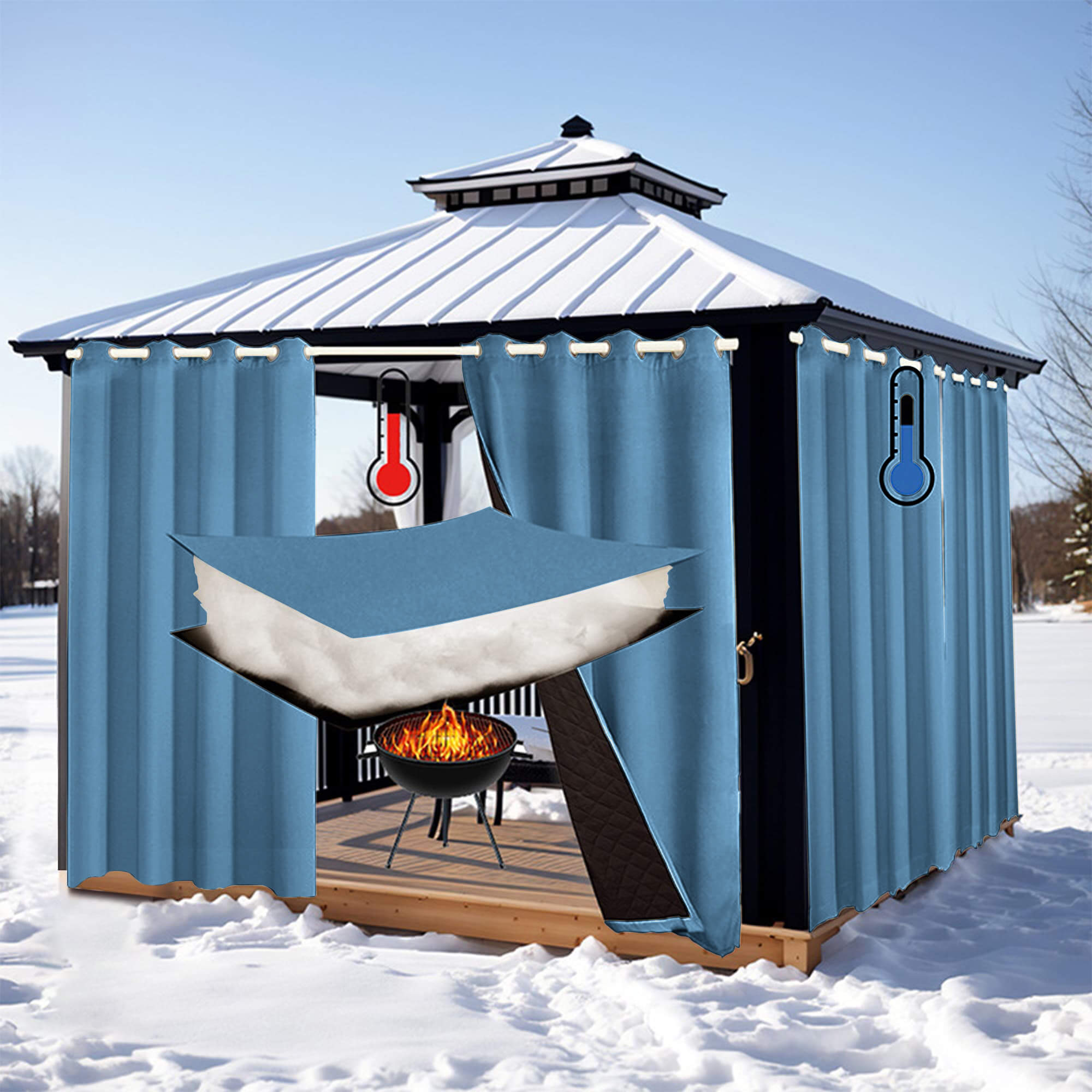
What is a grommet-top curtain?
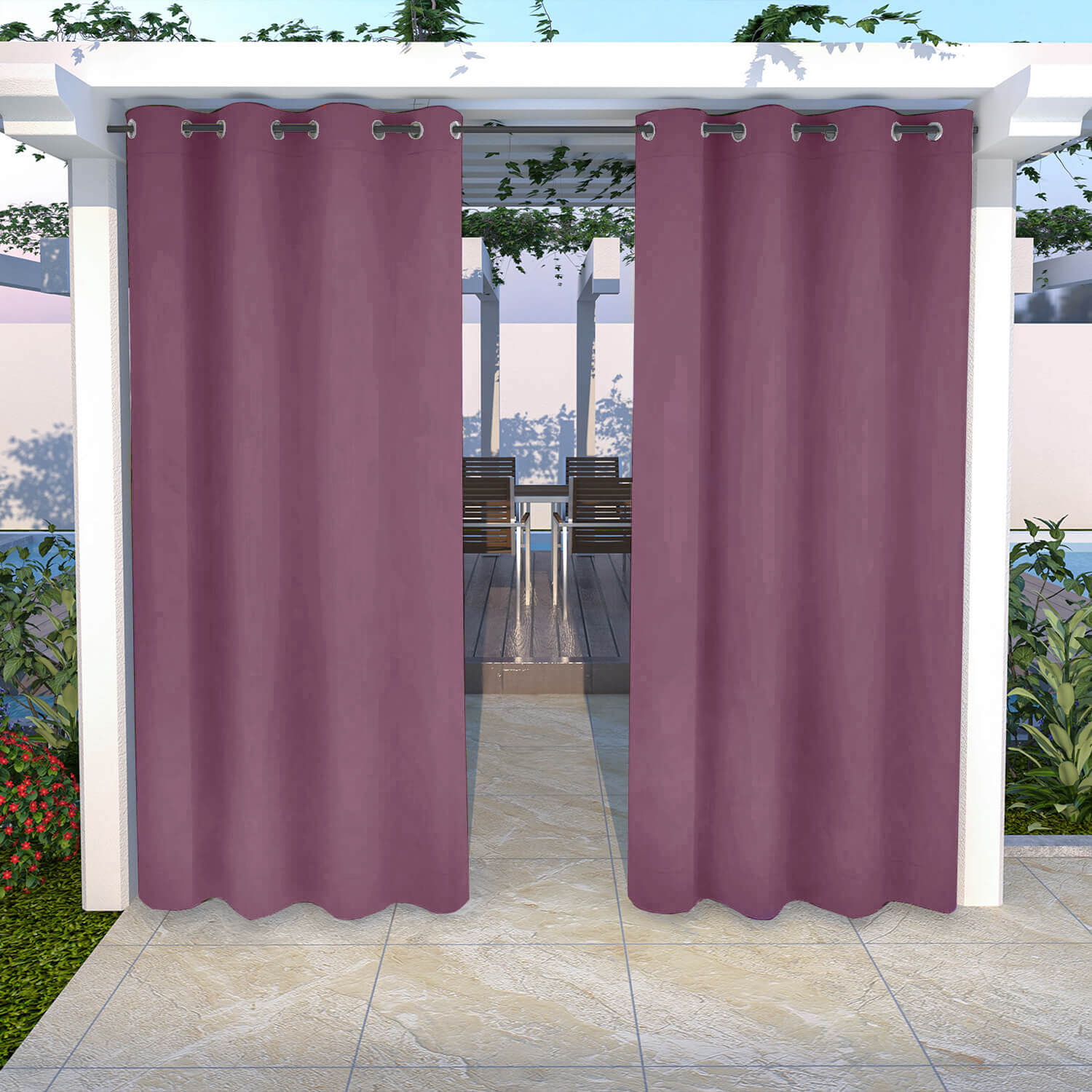
A grommet-top curtain has reinforced rings along its upper edge. A compatible rod passes through those rings, so the panel can hang in regular folds and slide from side to side. For a porch, patio, gazebo, or similar covered opening, this can be a straightforward arrangement when the rod diameter fits the grommet opening and the brackets are attached to a suitable structural surface.
The current Snowcity Light Beige Insulated Outdoor Curtain listing offers a Grommet Top configuration. Check the live product page for the current size, option details, and care guidance before ordering. The listing also describes anti-rust grommets; that outdoor-oriented detail can help support routine use, but it does not replace periodic inspection of the rings, rod, brackets, and mounting surface.
When a grommet top is the right starting point
Choose Grommet Top when the panel needs to move often and your main task is hanging it from an upper rod. It is commonly the simplest option for a covered opening where you want to pull panels closed for privacy or cold-weather coverage, then slide them aside for access. Leave enough space at both ends of the rod for the panels to stack, and do not force grommets over joints, brackets, or end hardware that blocks their path.
Header choice alone will not seal an outdoor opening. Wind and moisture can still move around posts, edges, hems, and the space above the rod. Use sensible overlap, secure hardware, and realistic expectations rather than treating a textile panel as a structural weather barrier.
What bottom perforated tape can help with
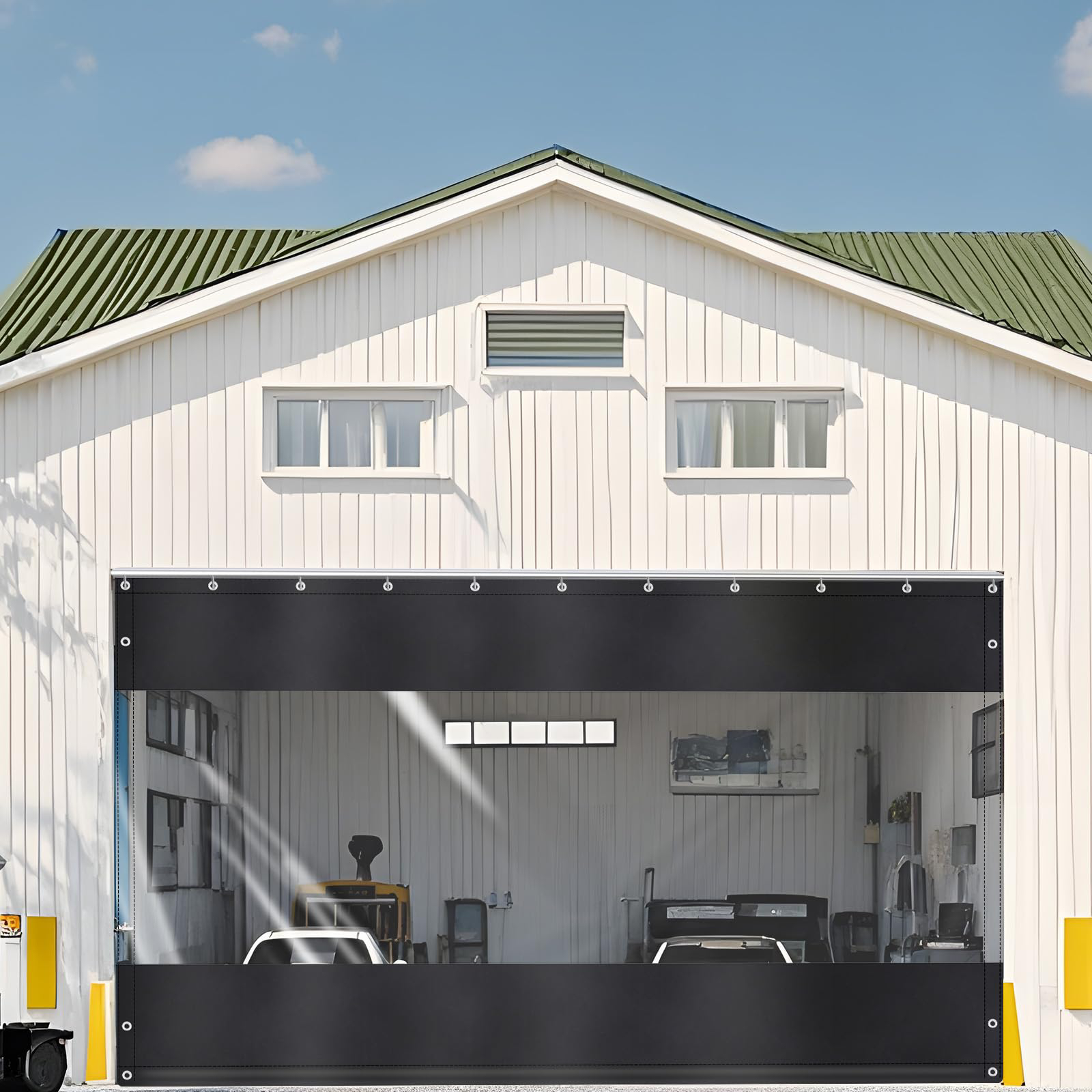
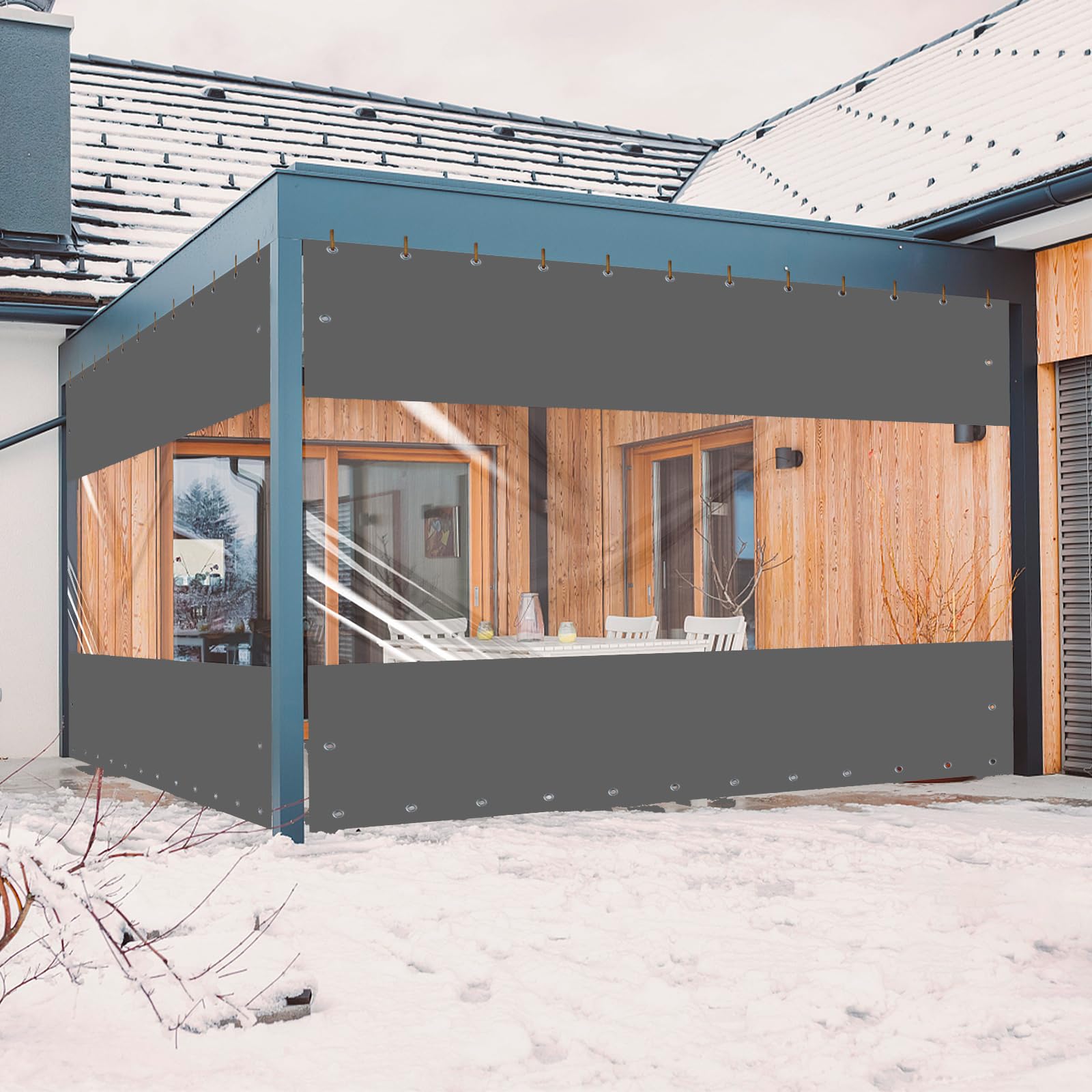
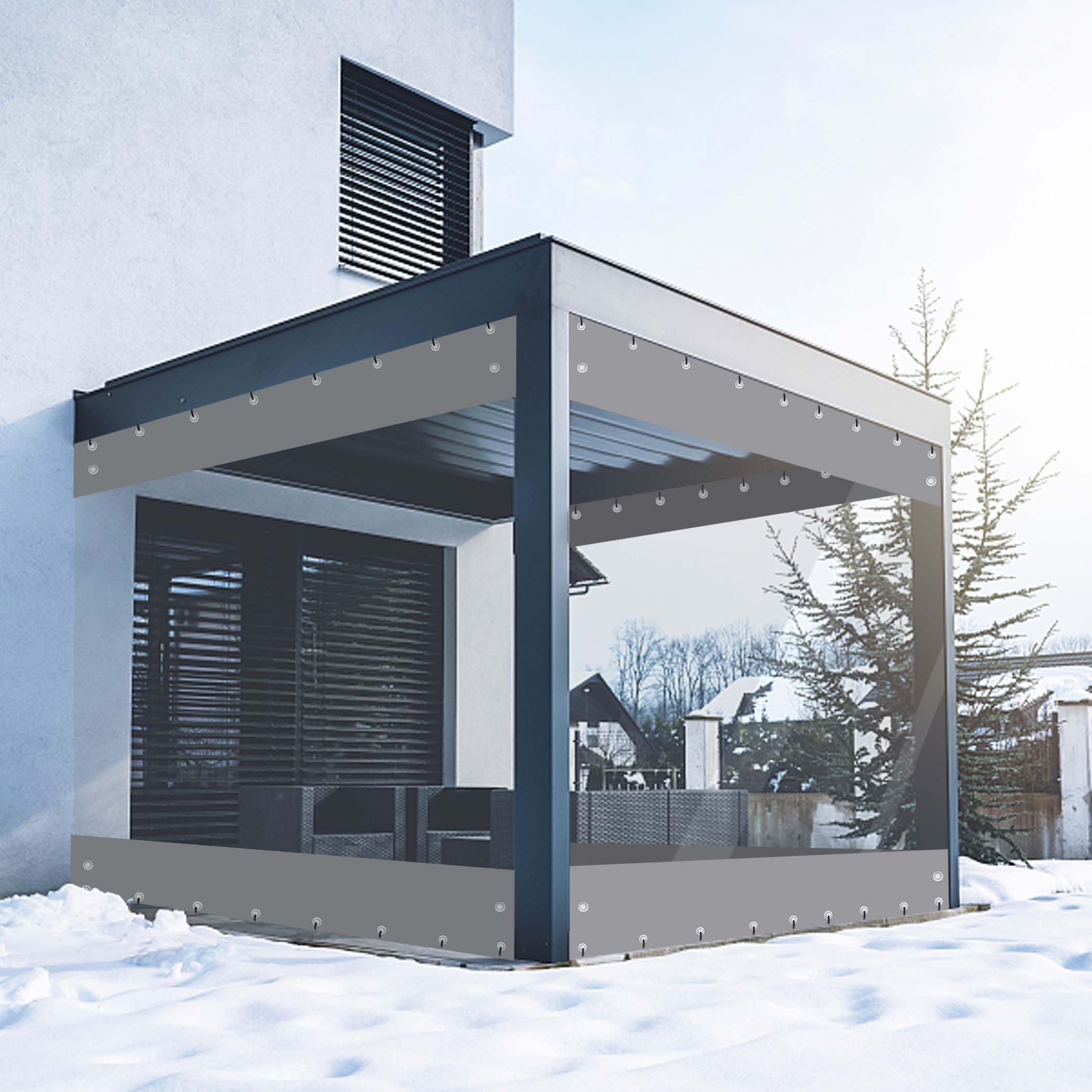
The product page also lists a Grommet Top & Bottom Perforated Tape option. This can suit a layout where you want the upper rod to carry the panel while the lower edge has a planned attachment or alignment point. Before selecting it, decide exactly how the lower edge will be managed: the support needs to be compatible with the option, smooth enough not to snag fabric, and installed so it does not interfere with a doorway, stairs, or an exit route.
A controlled lower edge may reduce everyday flutter in an appropriate installation, but it is not a guarantee against strong gusts or severe weather. Do not use a lower attachment to create a tripping hazard, pull the panel tightly against unsuitable hardware, or rely on it as storm protection. Secure, tie back, or remove curtains when conditions become unsafe.
When to choose grommet top and bottom
Grommet Top & Bottom is worth considering when your installation has a compatible plan for both the upper hanging path and the lower edge. It may be helpful on an opening where the curtain needs more deliberate positioning than a freely hanging panel. Confirm the selected configuration, finished dimensions, hardware fit, and any intended lower guide with the current product information before purchase.
More attachment points do not automatically make a curtain better for every space. They can make routine opening less convenient and can concentrate load where wind pulls on the fabric. A clear, safely mounted rod and a simple header may be the more practical choice for a frequently used entry.
Choose by use case, not by feature name
- Frequently used porch or patio opening: Start with Grommet Top if you want a rod-mounted panel that can slide aside regularly.
- Covered side opening with a planned lower support: Consider Grommet Top & Bottom Perforated Tape only when the lower attachment is compatible and keeps the walkway clear.
- More deliberately guided panel layout: Review Grommet Top & Bottom when both upper and lower attachment points suit the structure and daily use.
- Highly exposed or severe-weather location: Prioritize safe mounting, inspection, and weather routines; no header or bottom option turns fabric into a sealed storm barrier.
Before you order
Measure from the installed rod location to the intended lower edge, rather than from an assumed opening size. Note posts, railings, doors, lights, and where the curtain will stack when open. Confirm rod diameter against the grommets, check that brackets can support the panel and span, and keep curtains away from active flames, grills, heaters, and ventilation areas. These checks make the configuration choice more useful than choosing a style name in isolation.
Frequently asked questions
Are grommet-top curtains easy to move?
They can slide conveniently on a smooth, compatible rod because the rod passes through the reinforced rings. Actual ease of movement still depends on rod diameter, brackets, panel weight, and whether hardware interrupts the travel path.
Do anti-rust grommets make outdoor curtains weatherproof?
No. Anti-rust grommets are a construction detail for the hanging points. Outdoor performance also depends on fabric, seams, the installation, exposure, and how the curtains are managed in changing weather.
Should I add a lower attachment to every outdoor curtain?
No. A lower attachment is useful only when the product option and site support it. It should not obstruct access, bind the panel, or create an unsafe condition. A freely hanging grommet-top panel may be more suitable for many everyday openings.
Select the Snowcity style that fits your winter installation. Compare the live configuration details with your measurements and hardware plan before ordering.
Comment