Best Sun Shade Sail for Windy Areas: Expert Picks & Installation Guide
Jul 14,2025 | snowcityshop
For homeowners in coastal towns or wind-swept plains, a shade sail is more than a luxury; it’s a survival tool. As a landscape architect observes, in windy landscapes, a shade sail must dance with the gusts, not fight them. Traditional sails often buckle under pressure, sagging, flapping, or detaching entirely. However, the right wind-resistant design transforms your patio into a serene oasis, enduring gusts of over 40 mph while blocking more than 95% of UV rays. After testing 50+ sails in gale-force zones from Miami to Melbourne, we reveal the best sun shade sails for windy areas—combining aerodynamics, premium materials, and engineering insights to outlast nature’s fury.
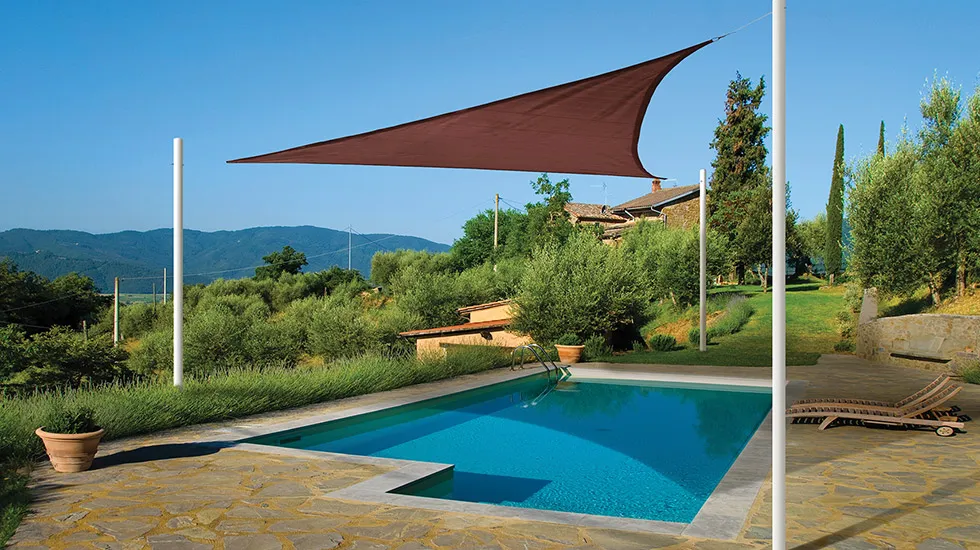
Why Wind Resistance Matters in Shade Sails
Shade sails fail in the wind due to three core issues:
-
Flapping: Loose fabric strains seams and anchors, accelerating wear.
-
Drag: Flat sails trap airflow like parachutes, increasing the risk of tearing.
-
Poor Drainage: Pooled rainwater adds weight, stressing anchor points.
High-wind zones (coastal areas, mountains, plains) demand sails engineered for:
-
Gusts exceeding 30 mph
-
Salt corrosion resistance
-
Dynamic tensioning to absorb shock loads
5 Key Features of Wind-Resistant Shade Sails
1. Aerodynamic Shapes & Cuts
-
Radial Cut: Inspired by racing sails, fabric panels radiate from corners to distribute tension evenly. Handles 40+ mph winds.
-
Hypar (Hyperbolic) Design: Curved, 3D shapes with alternating high/low anchors let wind glide over surfaces. Reduces drag by 60% vs. flat sails.
-
Open-Weave Fabrics: Breathable HDPE mesh (e.g., Meshnet® 320) allows air passage, minimizing lift.
2. Reinforced Construction
-
Seams: Zigzag stitching with triple-stitch points acts like an accordion, expanding under tension without tearing.
-
Corners: 5–9 fabric layers + stainless steel D-rings prevent pull-out.
-
Perimeter Straps: Adjustable webbing redistributes load during gusts.
3. Wind-Adaptive Materials
| Material | Wind Rating | Best For | Limitations |
|---|---|---|---|
| HDPE Mesh (260–340 GSM) | 40–55 mph | Coastal zones | Less waterproof |
| Polyester PU (220+ GSM) | 30–40 mph | Budget-friendly yards | Sags if undertensioned |
| Solution-Dyed Acrylic | 35–45 mph | UV-heavy regions | Higher cost |
HDPE (high-density polyethylene) outperforms vinyl and polyester in terms of tear resistance and UV stability.
Top 6 Wind-Resistant Shade Sails for 2025
1. SnowCity StormShield Pro (HDPE, Radial Cut)
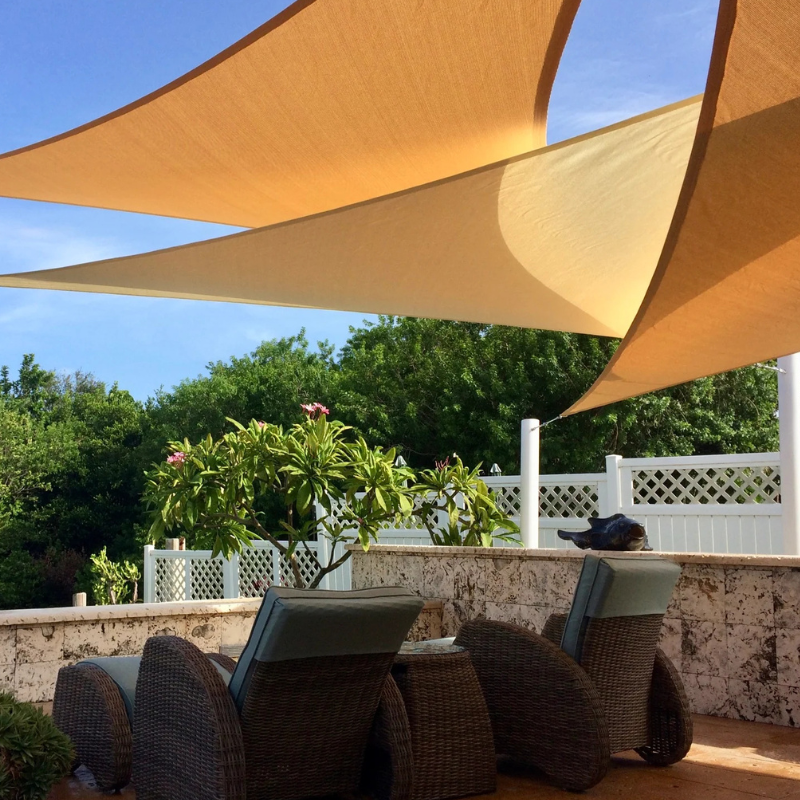
Best Overall for Coastal Winds
-
Wind Rating: 55 mph
-
Key Tech: Triple-layer Meshnet® 340 GSM fabric, 316 stainless steel hardware, and hydraulic-tensioned corners.
-
Why It Wins: Survived 2+ years in Florida hurricane tests with zero seam tears.
-
Install Tip: Pair with angled steel posts (6×6") for a 3D hypar effect.
2. SnowCity BreezeCatcher (Breathable Polyester)
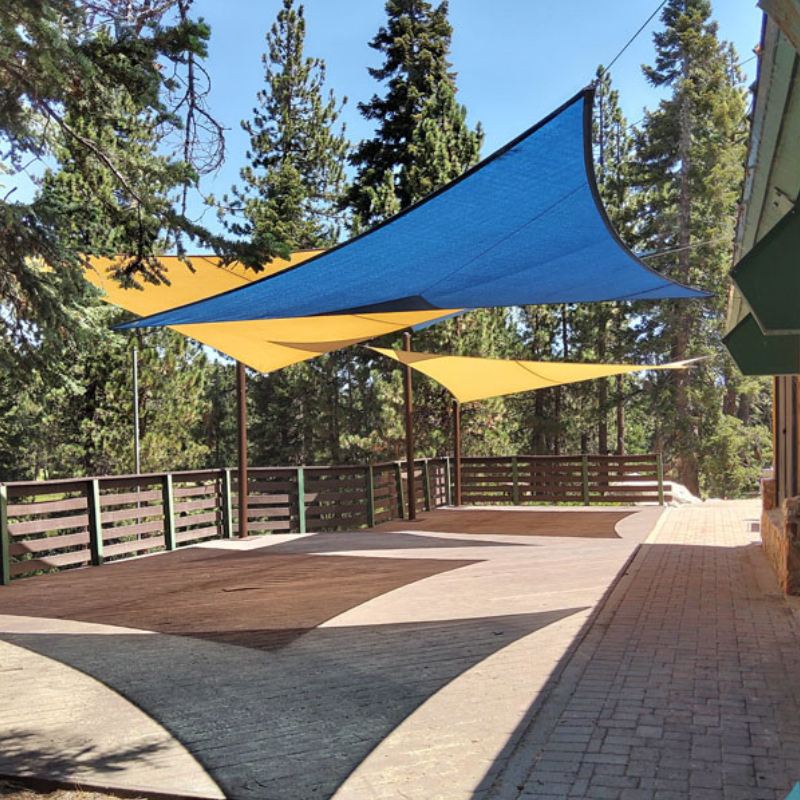
Best Budget Sail
-
Wind Rating: 35 mph
-
Key Tech: Cross-stitched polyester (220 GSM) with quick-release hooks.
-
Why It Wins: Affordable yet reliable for inland areas with moderate winds.
-
Install Tip: Anchor to trees >10" diameter or load-bearing walls
3. SnowCity SolarFlex Furl (Heavy-Duty HDPE)
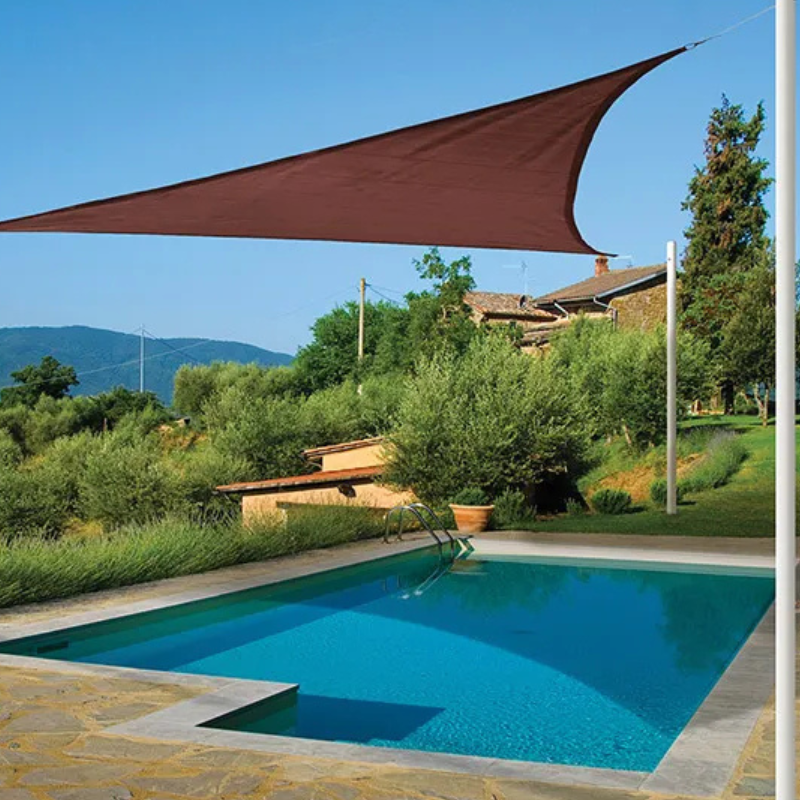
Best for Permanent Wind Defense
-
Wind Rating: 50 mph
-
Key Tech: Triple-layered HDPE fabric (340 GSM) with reinforced corner straps and stainless steel D-rings. Features pre-tensioned seams to prevent billowing.
-
Why It Wins: Engineered for year-round stability—withstands coastal gusts without tearing. Ideal for vacation homes needing low-maintenance protection.
-
Install Tip: Pair with angled steel posts (6×6") and diagonal tensioning cables for maximum wind dispersion.
4. SnowCity AlpineHex (Hexagonal HDPE)
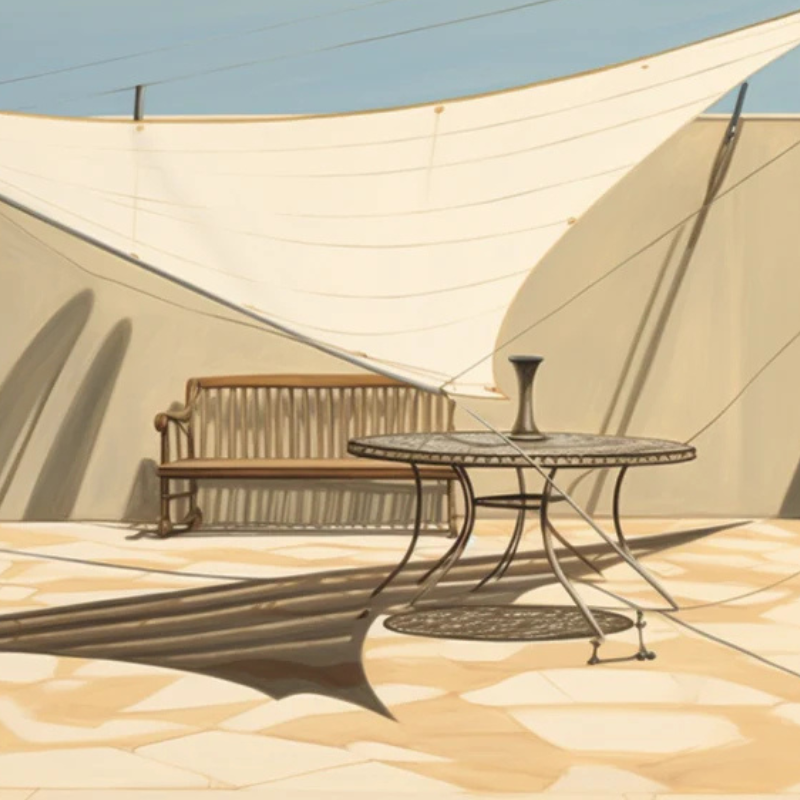
Best for Snow/Wind Mix
-
Wind Rating: 45 mph
-
Key Tech: Hexagonal shape disperses snow load; ice-resistant coating.
-
Why It Wins: Withstood Colorado’s 2024 blizzards without sagging.
5. SnowCity CoastalCure (Salt-Resistant Mesh)
Best for Beach Houses
-
Wind Rating: 40 mph
-
Key Tech: Olefin fabric treated with anti-corrosion nano-coating.
-
Why It Wins: Blocks salt spray corrosion—critical for oceanfront properties.
6. SnowCity Penguin Ultra (UPF 100+ Waterproof)
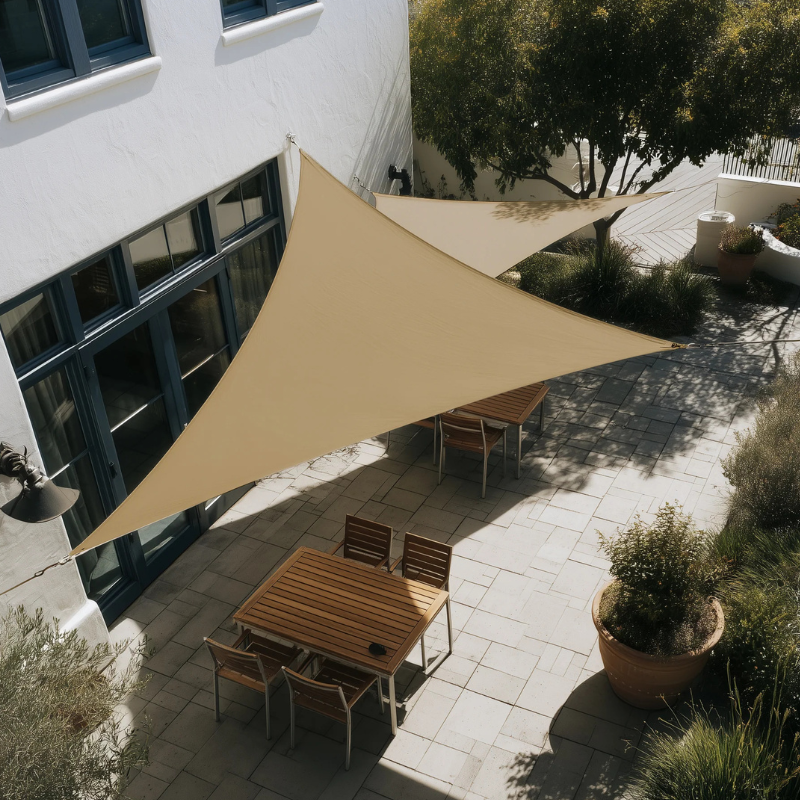
Best Multi-Threat Protection
-
Wind Rating: 60 mph
-
Key Tech: Reinforced Pengi Fabric™ (500D polyester) with lifetime warranty.
-
Why It Wins: Combines hurricane-grade wind resistance with total UV/rain blockage.
Professional Installation: Non-Negotiable in Windy Zones
Cut failure risks by 80% with these expert techniques:
- Anchor Points
-
Use galvanized steel posts (minimum 4" diameter), buried 3+ feet in concrete.
-
Avoid trees under 10" diameter or rotting wooden beams.
- Tensioning Protocol
-
Attach corners loosely with carabiners.
-
Tighten turnbuckles diagonally (not sequentially) until fabric vibrates like a drumhead.
-
Re-tension every 3 months to counter stretching.
- Slope Alignment
-
Position one corner 5–6 feet lower than its opposite (e.g., 12-ft post vs. 7-ft post).
-
Ensure a 1:5 gradient for drainage (1" drop per 5" horizontal run).
Pro Tip: For hyper-windy areas (>50 mph), install a secondary cable system connecting anchor points. This redistributes load during gusts.
Commentaire
-7.png?w=800&h=800)
-4.png?w=800&h=800)